 uk
uk



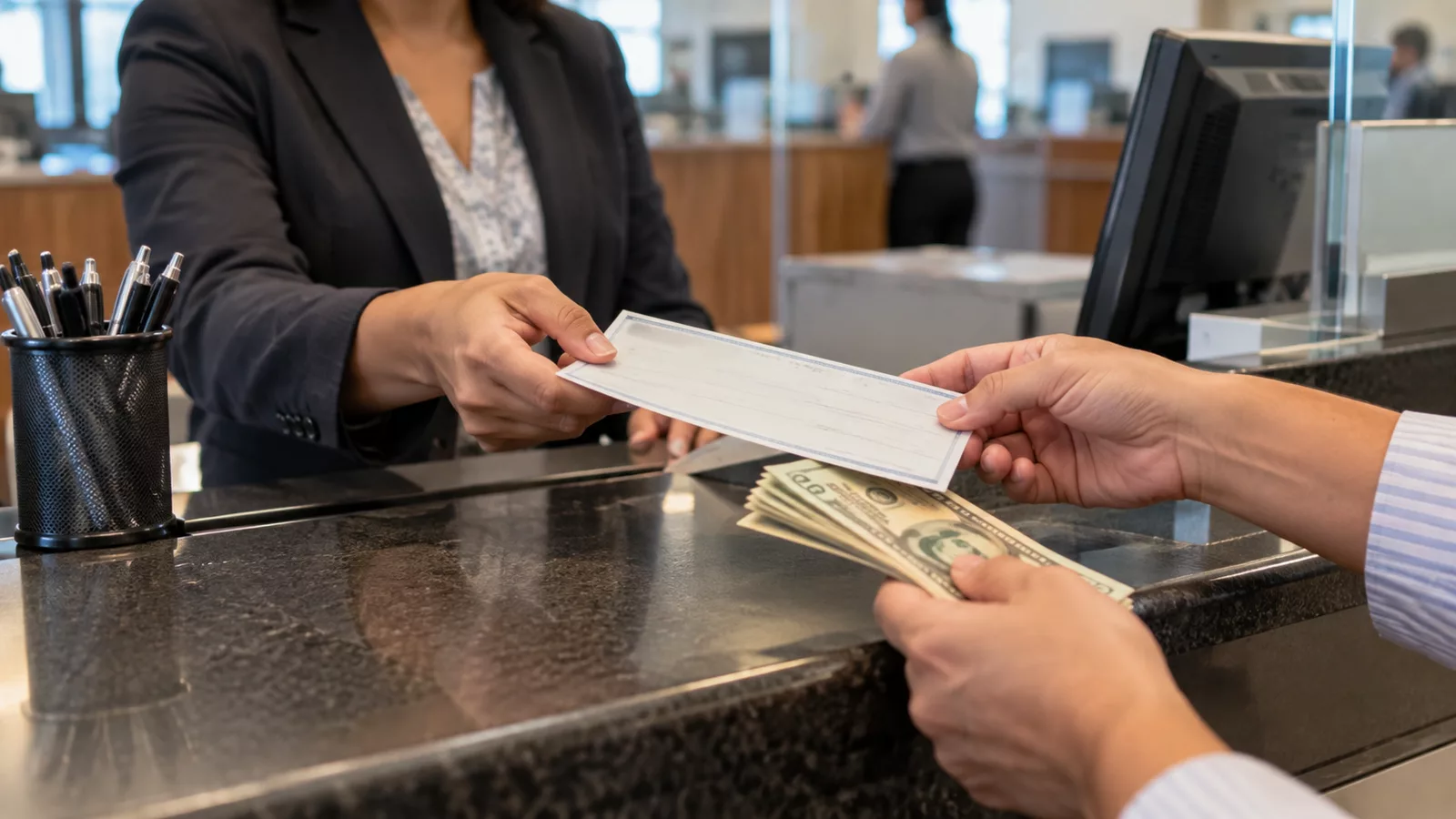
Where can I get a personal check cashed? The simplest option is usually your own bank or credit union if you already have an account. If you do not, the bank or credit union named on the check may be able to cash it after verifying the check, available funds and your identity. Depending on the check and where you live, retailers, check-cashing businesses and some financial apps may provide additional options.
A business is not automatically required to cash every personal check presented to it. Policies can differ according to the institution, check type, amount, location and whether you are an existing customer. Fees can also vary substantially, so checking the requirements before visiting can save both time and money.
Before going anywhere, look at the financial institution printed on the check and make sure the check is payable to you. Bring acceptable identification and avoid endorsing the check until you know how the institution wants it completed. If you need the money immediately, also ask whether the check can actually be cashed rather than merely deposited with a hold.
Where to Cash a Personal Check at a Glance
The best place to start depends largely on whether you already have a bank or credit union account. Existing customers often have more options and may avoid a separate check-cashing fee, while people without accounts may need to compare several alternatives. The institution printed on the check is generally one of the first places worth contacting when you do not have your own bank.
| Place | Account usually required? | Possible fee? | Good first choice? |
|---|---|---|---|
| Your bank | Yes | Often no separate check-cashing fee | Yes |
| Your credit union | Yes | Often no separate check-cashing fee | Yes |
| Bank that issued the check | No in some cases | Yes, possible | Yes |
| Another bank | Often | Yes, possible | Sometimes |
| Retailer | No | Usually | Depends on check policy |
| Check-cashing store | No | Usually | Convenient but compare cost |
| Prepaid/mobile financial service | Depends | Possible | Check eligibility first |
Your own financial institution is usually the logical first stop because you already have an established relationship there. Without an account, look at the bank name printed on the check and contact that institution before paying a third-party service. Retailers and check-cashing businesses can still be useful, but their fees and personal-check policies deserve careful comparison.
1. Cash the Personal Check at Your Own Bank
If you have a checking or savings account, your bank is usually one of the easiest places to cash a personal check. Bring the check and whatever identification your institution requires, and ask whether the full amount can be paid in cash immediately. The bank may instead require you to deposit the check or may make only part of the money available initially, depending on the circumstances and applicable policies.
Being an existing customer can simplify the process because the institution already has information about your identity and account relationship. However, having an account does not guarantee that every check will be cashed immediately. A bank can still investigate a suspicious check, apply a hold to deposited funds or decline a check that does not meet its requirements.
If immediate access matters, be specific when speaking with the teller. Ask, “Can you cash this check today, and will the full amount be available?” That question is more useful than simply asking whether the bank accepts personal checks, because acceptance for deposit and immediate cash availability are not the same thing.
2. Try Your Credit Union
If you belong to a credit union, it can provide many of the same check-cashing services as a traditional bank. Depending on the institution and your account, the credit union may cash the personal check directly or require you to deposit it before withdrawing the funds. Bring acceptable identification and check the institution’s requirements before visiting if the amount is unusually large.
Account terms still matter, so do not automatically assume every transaction is free or immediate. Some deposits may be subject to availability rules or additional verification, particularly when a check is large or unusual for the account. Asking about the fee and availability timeline beforehand can prevent surprises at the counter.
For someone who receives paper checks regularly, maintaining an appropriate bank or credit union account may also reduce reliance on third-party check-cashing businesses. Even modest fees become significant when they are paid several times every month. Compare the complete cost of the account with what you would otherwise spend on repeated check-cashing services.
3. Go to the Bank That the Personal Check Is Drawn On
If you do not have a bank account, look at the financial institution identified on the check. If someone gives you a personal check drawn on Bank A, for example, you can contact Bank A and ask whether it cashes its checks for non-customers. This can be one of the most practical options because the institution may be able to verify the account on which the check was written.
Do not assume the bank must cash the check simply because its name appears on it. Policies for non-customers can vary, and the institution may consider whether you are the named payee, whether the check appears valid, whether sufficient funds are available and whether your identification meets its requirements. Transaction limits and other fraud-prevention procedures may also affect the decision.
The institution may charge a non-customer check-cashing fee even when it agrees to complete the transaction. Call the branch before traveling there, especially for a large check, and ask about the current personal-check policy, required identification and fee. Knowing those details in advance lets you compare the issuing bank with other available options.
4. Ask Another Bank or Credit Union
A bank or credit union that has no relationship with either you or the check writer may still offer check-cashing services in some circumstances, but this is generally a less reliable option. The institution may refuse the personal check entirely or limit check cashing to existing customers. That is why your own financial institution and the bank named on the check are usually better starting points.
If you want to try another institution, call before visiting and explain that you have a personal check rather than a payroll, government or cashier’s check. Ask whether non-customers are eligible, what identification is required and whether there is a maximum check amount. You should also request the exact fee or at least an explanation of how the fee is calculated.
A quick phone call is particularly worthwhile if you need to travel far to reach the branch. There is little benefit in visiting several banks that do not cash personal checks for non-customers. Comparing policies first makes it easier to identify the lowest-cost legitimate option.
5. Cash a Personal Check at a Retailer
Some large retailers and grocery stores provide check-cashing services, which can be useful when bank branches are closed or inconvenient. Retail locations may also have longer operating hours, including evenings and weekends. However, the fact that a retailer advertises check cashing does not necessarily mean it accepts ordinary personal checks.
Many retailers limit their services to particular types of checks, such as payroll, government, tax-refund or cashier’s checks. Personal checks may be excluded or subject to different limits and verification procedures. Policies can also change, so relying on information from an old article or an unrelated store location can lead to a wasted trip.
Before visiting, confirm that the specific location accepts personal checks and ask about the maximum amount, required ID and check-cashing fee. Also ask how the money will be provided, since some services may offer alternatives to physical cash. The right retailer can be convenient, but convenience should be compared with the total cost of the transaction.
6. Use a Check-Cashing Store
Dedicated check-cashing businesses are designed for people who need to convert checks into accessible funds, including customers without traditional bank accounts. Their biggest advantage is convenience, especially when other financial institutions will not cash the check. The main disadvantage is that the service can become expensive when fees are charged repeatedly.
Fees may be flat amounts, percentages of the check or another structure depending on the provider, location and check type. Always ask for the total dollar fee before completing the transaction, because a small-looking percentage can become significant on a larger check. For example, a hypothetical 3% fee on a $1,500 personal check would cost $45, leaving you with $1,455.
If you paid that hypothetical $45 fee twice every month, the annual cost would reach $1,080. That does not automatically make a check-cashing store the wrong option, but it shows why repeated fees deserve attention. If you regularly receive checks, compare the annual cost with an appropriate bank or credit union account rather than evaluating each transaction separately.
7. Check Whether a Prepaid Card or Mobile Financial Service Accepts It
Some prepaid-card programs and financial apps allow eligible customers to deposit personal checks using a mobile device. You generally photograph the front and back of the check through the provider’s official app and wait for the deposit to be processed. This is closer to depositing a check than exchanging it directly for physical cash, but it can still provide access to funds without visiting a bank branch.
Eligibility, processing times and fees vary significantly between providers. Some services may offer slower processing at little or no cost while charging for expedited access, and deposit limits can restrict larger checks. You should also consider how you will withdraw or spend the money after the deposit is completed.
Before uploading a check, verify that personal checks qualify and that you are using the provider’s legitimate application. Review deposit limits, processing times, expedited-access fees and withdrawal options. A check contains sensitive financial information, so avoid uploading images through unofficial websites, messages or links sent by strangers.
Where Can I Cash a Personal Check Without a Bank Account?
You can potentially cash a personal check without having your own bank account, but your options are more limited. Start with the bank or credit union printed on the check and ask whether it provides check cashing to non-customers. If it does not, investigate legitimate retailers and check-cashing businesses that specifically accept personal checks.
| Option | Why consider it | Main drawback |
|---|---|---|
| Bank named on check | May be able to verify issuing account | Non-customer fee or refusal |
| Retailer | Convenient hours and locations | Many exclude personal checks |
| Check-cashing service | Designed for non-bank customers | Fees can be significant |
| Eligible prepaid/mobile service | Can avoid branch visit | Processing and withdrawal restrictions |
Compare the actual dollar cost rather than simply choosing the first place willing to cash the check. If you receive personal checks frequently, calculate what repeated fees cost over a full year. Opening an appropriate low-cost bank or credit union account may be cheaper over time, provided the account itself does not introduce higher maintenance or overdraft costs.
Can I Cash a Personal Check at Any Bank?
You cannot assume that any bank or credit union will cash a personal check simply because you walk into a branch. A financial institution where neither you nor the person who wrote the check has an account may refuse the transaction. Even the institution on which the check is drawn can have specific policies for non-customers.
The bank may require acceptable identification, limit the maximum amount or charge a fee before providing cash. Additional verification can also be required if the check appears unusual or potentially fraudulent. Calling ahead is particularly useful when you are not an account holder or when the check amount is large.
Start with the institutions that have the strongest connection to the transaction: your own bank or the bank named on the check. Only after checking those options does it usually make sense to investigate unrelated banks and paid third-party services. This order can reduce both inconvenience and unnecessary fees.
What Do I Need to Cash a Personal Check?
Identification requirements vary, but expect the business to verify that you are the person entitled to receive the money. A government-issued photo ID such as a driver’s license, state identification card or passport is commonly useful, although each institution determines what it accepts. If you do not have standard identification, contact the location before visiting and ask whether alternative documents are permitted.
Inspect the front of the check before attempting to cash it. Your name should be correct, the dollar amount should be clear and the check should contain the information required for processing. If the check appears altered, damaged or suspicious, contact the person who gave it to you before trying to obtain the funds.
Avoid signing the back days before you plan to use the check unless the institution specifically instructs you otherwise. Many people endorse the check when they are ready to cash or deposit it, reducing the time a signed check is being carried around. Follow the institution’s instructions because mobile deposits and other transaction types can require additional endorsement wording.
How Do You Endorse a Personal Check?
A standard endorsement usually involves signing your name on the back of the check within the designated endorsement area. The signature should correspond appropriately with the payee information, although specific institutional requirements can differ. If you are making a mobile deposit, your bank may require additional wording alongside the signature.
Do not write unnecessary information across the back of the check or attempt to correct major errors yourself. Incorrect endorsements can delay processing or cause an institution to refuse the transaction. If you are unsure what to write, ask the bank, credit union or check-cashing provider before signing.
It is also sensible to avoid carrying a signed check longer than necessary. A lost unsigned check can already create problems, while an endorsed check may create additional complications. Endorsing it shortly before the transaction helps reduce unnecessary exposure.
Can Someone Else Cash My Personal Check?
A check payable to you that you sign over to another person becomes what is commonly known as a third-party check. Some financial institutions accept these checks under certain circumstances, while others refuse them because they introduce additional fraud and identity-verification risks. Additional identification or the presence of both people may sometimes be required.
Do not sign a personal check over to another person until you have confirmed that the receiving institution will accept it. Otherwise, you may create an endorsement that makes the check harder for you to use elsewhere. Contact the bank and explain the exact situation before making changes to the check.
If your goal is simply to transfer money to someone else, depositing or cashing the check yourself may be simpler. You can then use an appropriate payment method to transfer the money separately. This avoids introducing another person into the original check transaction.
Can I Cash a Personal Check With No ID?
Cashing a personal check without identification can be difficult because financial institutions and check-cashing businesses generally need to confirm the identity of the payee. Banks and credit unions can have their own requirements regarding acceptable identification. A location that accepts one alternative document may reject another.
If you do not have a driver’s license, passport or other standard government-issued photo ID, contact the institution before visiting. Explain what identification you do have and ask whether it meets current requirements. This is more reliable than making repeated trips to different locations hoping one will accept the check.
Do not use another person’s identification or provide false information to complete the transaction. If lack of acceptable identification repeatedly prevents you from accessing financial services, obtaining a recognized form of ID can solve more than the immediate check-cashing problem. Requirements and available identification documents vary by jurisdiction.
How Much Does It Cost to Cash a Personal Check?
The cost of cashing a personal check can range from no separate fee to a substantial charge. Your own bank or credit union may include the service as part of your account relationship, while an institution where you are not a customer may charge. Retailers and dedicated check-cashing businesses can use flat fees, percentage-based fees or other pricing structures.
| Check amount | Hypothetical fee | Fee amount | Cash received |
|---|---|---|---|
| $100 | 1% | $1 | $99 |
| $500 | 2% | $10 | $490 |
| $1,000 | 3% | $30 | $970 |
| $2,000 | 3% | $60 | $1,940 |
| $5,000 | 3% | $150 | $4,850 |
These figures are examples only and are not current prices for any particular provider. Percentage-based charges become particularly important as the check amount increases, since the dollar fee rises automatically. Always request the exact fee before authorizing the transaction and compare it with any lower-cost option available to you.
Can the Issuing Bank Charge Me to Cash a Check?
The fact that a personal check is drawn on a particular bank does not necessarily mean a non-customer will receive free check cashing there. Financial institutions can have fees and policies for people who do not maintain accounts with them. Applicable laws and special circumstances can affect the rules, so the exact answer can vary.
Ask the branch what it will charge before completing the transaction. If there is a fee, compare the amount with what your own institution or another legitimate option would cost. A small difference may not justify traveling elsewhere, while a substantial percentage fee on a large check may make comparison worthwhile.
Also distinguish between the bank refusing to cash the check and charging a fee to cash it. Those are separate issues and may require different alternatives. Knowing the institution’s policy before visiting helps you decide whether it is still the best place to start.
How Long Does It Take to Cash a Personal Check?
If an institution agrees to cash a personal check and completes its verification, you may receive the cash during the transaction. Depositing the check is different because deposited funds may not all become available immediately. The timeline can depend on the amount, deposit method, account history, type of check and institution’s policies.
A mobile deposit can also follow a different timetable from a check presented to a teller. Seeing a pending or completed deposit displayed in your account does not necessarily mean every dollar can immediately be withdrawn. Check the stated funds-availability date rather than making assumptions based on the account balance alone.
If you need the money for a specific payment, ask the institution when the funds will actually be available for withdrawal. That question gives you more useful information than simply asking how long the deposit takes. It can also help you decide whether paying for faster check cashing is truly necessary.
Why Would a Bank Refuse to Cash a Personal Check?
A bank can refuse a personal check for several reasons, and refusal does not automatically mean the check is fraudulent. You may not be an eligible customer, your identification may be insufficient or the amount may exceed the institution’s check-cashing limit. An old, altered or improperly endorsed check can also create problems.
The bank may also be unable to verify the check or may determine that sufficient funds are not available in the writer’s account. Third-party checks can face additional restrictions, and fraud-prevention systems may flag transactions for further review. Policies differ between institutions, so another legitimate method may sometimes still work.
Ask why the check was declined before immediately trying another location. A missing ID creates a different problem from insufficient funds or suspected alteration. Understanding the reason can prevent you from repeating the same unsuccessful transaction elsewhere.
What If There Is Not Enough Money in the Writer’s Account?
A personal check is generally dependent on the account against which it is written. If sufficient funds are not available, the check can be returned unpaid. This can happen even after you deposit the check and initially see money reflected in your account.
That distinction is particularly important with checks received from strangers. Initial funds availability does not necessarily prove that the check is genuine or that final payment has been completed. If a fraudulent or unpaid check is later returned, money previously made available can be removed from the account.
If you know the check writer, contact them when a legitimate payment is returned. If the check came from an unfamiliar person through an online sale, job offer, prize or unusual transaction, treat the situation much more cautiously. Never send part of a stranger’s check proceeds elsewhere merely because the deposit initially appears successful.
Personal Check vs Cashier’s Check – What’s the Difference?
A personal check and cashier’s check can both be used to make payments, but they are different financial instruments. A personal check is drawn against the account of the person or organization writing it, while a legitimate cashier’s check is issued by a financial institution using its own funds. This difference can affect how recipients and financial institutions evaluate the payment.
| Feature | Personal check | Cashier’s check |
|---|---|---|
| Drawn on | Individual’s or organization’s account | Bank’s funds |
| Signed/issued by | Account holder | Financial institution |
| Payment depends on writer’s account | Yes | Generally no in the same way |
| Can be fraudulent | Yes | Yes, counterfeit cashier’s checks exist |
| Acceptance policies vary | Yes | Yes |
Do not assume a cashier’s check is automatically safe simply because it looks official. Counterfeit cashier’s checks are used in scams, and a fake document can include convincing bank logos and formatting. If a large or unexpected check comes from someone you do not know, verify the transaction independently before sending money or transferring goods.
Personal Check vs Payroll Check
A personal check is typically drawn against an ordinary checking account, while a payroll check is issued as payment for wages. This distinction matters because many retailers and check-cashing businesses have different acceptance rules for different check types. A location may readily cash payroll checks while refusing ordinary handwritten personal checks.
When calling a business, specify that you have a personal check rather than simply asking whether it cashes checks. Otherwise, an employee may confirm that check-cashing services are available without realizing you are asking about a type the location excludes. Clarifying the check type can prevent an unnecessary trip.
Fees and limits can also differ by check category. Never assume that a price advertised for payroll checks applies to a personal check. Ask about your exact check type and amount before deciding where to go.
Can I Deposit a Personal Check Instead of Cashing It?
If you have an eligible bank or credit union account, depositing a personal check may be easier than searching for a separate place to cash it. Depending on your institution, you may be able to deposit the check with a teller, through an eligible ATM or by using mobile deposit. Depositing also avoids carrying the entire amount as physical cash after the transaction.
The tradeoff is that deposited funds may not all be available immediately. A hold can apply depending on the check, amount, account and deposit method. If timing matters, ask your institution exactly when the money will become available before deciding whether depositing meets your needs.
Depositing can also provide a clearer transaction record than receiving physical cash. If you intend to use most of the money for electronic bills, transfers or card purchases anyway, converting the entire check into currency may create an unnecessary extra step. Choose the method based on how you actually need to use the funds.
Can I Mobile Deposit a Personal Check?
Many banks and credit unions allow eligible customers to deposit personal checks through their mobile apps. The usual process involves photographing the front and back of the check and following the institution’s specific endorsement instructions. Mobile deposit can eliminate a branch visit, but it does not guarantee immediate access to the full amount.
Check the institution’s mobile-deposit limit before attempting to submit a large personal check. Make sure the images are clear, the endorsement is correct and the check qualifies for mobile deposit. You should also review when the funds are expected to become available.
Keep the physical check after submitting it until your institution indicates that the deposit has been successfully processed, then follow its instructions for retention and destruction. Never attempt to deposit the same check again through another channel after a successful mobile submission. Duplicate deposits can create serious account problems.
What Happens If You Cash a Fake Check?
Fake-check scams are dangerous because the transaction can appear successful before the fraud is discovered. A scammer may send you a check, wait for the bank to make some money available and then instruct you to send part of those funds elsewhere. When the check is later identified as fraudulent, the legitimate money you sent to the scammer may already be impossible to recover.
These scams can appear as overpayments for items sold online, remote-job equipment payments, mystery-shopping assignments, prizes or supposed business transactions. The story changes, but the basic structure is often similar: you receive a check and are instructed to send some of the money somewhere else. That request should trigger immediate caution.
Funds appearing available in your account do not necessarily prove that a check is genuine. Never use temporary account availability as the sole reason to trust a stranger’s payment. Verify unexpected checks independently before sending money, purchasing gift cards, transferring cryptocurrency or forwarding funds.
7 Things Most People Miss When Cashing a Personal Check
The mechanics of check cashing can look simple, but several details regularly create problems. A location that advertises check cashing may not accept personal checks, and a bank named on the check may charge non-customers. Identification requirements, transaction limits and funds-availability rules can also change which option works best.
Seven details are especially worth checking:
- “We cash checks” may not include personal checks. Confirm the exact check type.
- The issuing bank may charge non-customers. Ask for the dollar fee first.
- You may need specific identification. Do not assume every photo ID is accepted.
- Cashing and depositing are different. A deposit can involve a funds-availability period.
- Third-party checks are harder to cash. Confirm acceptance before signing one over.
- Available funds do not prove a check is legitimate. Fake checks can initially appear successful.
- Repeated check-cashing fees add up. Compare the annual cost if you receive checks regularly.
These details matter more than simply finding the nearest business with a check-cashing sign. A few questions before the transaction can help you avoid an unnecessary fee, rejected check or fraud problem. When several legitimate options are available, compare total cost and timing rather than convenience alone.
What to Ask Before Cashing a Personal Check
A short phone call can prevent many of the most common check-cashing problems. Tell the institution that you have a personal check, give the approximate amount if asked and explain whether you are an existing customer. This allows the employee to provide information that actually applies to your situation.
Ask these questions:
- Do you cash personal checks?
- Do I need to be an account holder?
- What ID do I need?
- What is your maximum check amount?
- What exact fee will I pay?
- Will I receive cash immediately?
- Are there additional verification requirements?
If the employee cannot provide an exact fee without inspecting the check, ask how the charge is calculated. A percentage-based fee is particularly important to understand when the check is large. Never assume terms such as “low fee” or “small service charge” mean the transaction will be inexpensive.
Should You Pay a Fee to Cash a Personal Check?
Paying a modest fee can sometimes be reasonable when you do not have a bank account and need legitimate access to the money quickly. The decision should depend on the actual dollar amount, not simply whether the provider describes the charge as small. A $5 flat fee and a 5% fee can produce very different costs on a large check.
If you need check cashing regularly, calculate the annual expense rather than evaluating each transaction separately. Repeated small charges can quietly consume hundreds of dollars over a year. At that point, comparing bank accounts, credit unions or other lower-cost financial services becomes more important.
The same principle applies to other automatic expenses in your financial life. Understanding how a recurring payment works can help you identify charges that appear minor individually but become substantial when repeated. Reducing recurring transaction costs can free money for savings and other priorities.
What If the Personal Check Is Postdated?
A postdated personal check contains a date in the future, often because the writer expects funds to become available later. Do not assume that writing a future date creates an absolute technical barrier preventing earlier processing. Banking rules and procedures can be more complicated than the date printed on the check.
If someone intentionally gives you a postdated check, clarify when they expect you to cash or deposit it. This is particularly important if attempting payment earlier could create insufficient-funds problems for the writer. Clear communication is safer than assuming both parties understand the date in exactly the same way.
For important transactions, consider whether another payment method would provide clearer timing and availability. A check can create uncertainty when both sides are relying on different assumptions about when the money will move. Understanding the payment method before accepting it can prevent later disputes.
Where Can I Get a Personal Check Cashed on Sunday?
Sunday options can be more limited because many traditional bank and credit union branches are closed or operate reduced hours. Retailers and dedicated check-cashing businesses may offer longer weekend hours, but you still need to confirm that the specific location accepts personal checks. A store that cashes payroll checks on Sunday may still reject an ordinary personal check.
Mobile deposit can provide another option when your financial institution supports it. You may be able to submit the check through an app at any time, although submitting it on Sunday does not necessarily mean the funds will become available immediately. Processing schedules and availability rules still apply.
If the money can wait until the next business day, compare the cost of waiting with the fee for immediate service. Paying a substantial check-cashing fee solely because a branch is closed for one day may not be worthwhile. When access is genuinely urgent, confirm the total cost before traveling to a weekend provider.
Where Can I Get a Personal Check Cashed Without Losing Money to Fees?
There is no single place that works for every personal check, but your own bank or credit union is usually the strongest starting point when you already have an account. Without one, contact the financial institution named on the check and ask about its non-customer policy, required identification and fees. Retailers and check-cashing businesses can provide alternatives, but confirm that they accept personal checks before visiting.
Compare the complete cost of each legitimate option and consider whether you actually need physical cash immediately. Depositing the check may be less expensive when you have an eligible account and can wait for funds to become available. If you receive checks regularly, repeated fees are a strong reason to investigate a lower-cost long-term banking solution.
Most importantly, use additional caution when a check comes from someone you do not know. Money appearing in your account does not automatically prove that the check is genuine, particularly when a stranger asks you to send part of the proceeds elsewhere. The best place to cash a personal check is the legitimate option that gives you reliable access to the money at the lowest reasonable total cost.
FAQ
You can try your own bank or credit union, the financial institution on which the check is drawn, certain retailers, dedicated check-cashing businesses or eligible prepaid and mobile financial services. Your own institution is usually the best starting point when you already have an account. Without an account, contact the bank named on the check before paying a third-party service.
Start with the bank or credit union printed on the check and ask whether it provides check cashing to non-customers. If it does not, compare reputable retailers and dedicated check-cashing businesses that specifically accept personal checks. Check fees, identification requirements and transaction limits before visiting.
No, you cannot assume that every bank will cash a personal check for you. An unrelated financial institution may restrict the service to customers, while the bank on which the check is drawn may have separate non-customer requirements. Calling ahead is the easiest way to confirm eligibility and fees.
Potentially, and the issuing bank is often one of the first places worth trying when you do not have your own account. The institution may still require identification, verify the check and impose transaction limits. A non-customer fee may also apply.
Expect the institution to verify that you are the person entitled to the funds. A government-issued photo ID is commonly accepted, but exact requirements vary between banks, credit unions, retailers and check-cashing businesses. Contact the provider if you only have alternative identification.
Your options may be limited because check-cashing providers commonly need to verify the payee's identity. Some institutions may accept alternative forms of identification, but this depends on their policies. Call before visiting rather than assuming the transaction can be completed without ID.
Some institutions accept third-party checks, while others refuse them because of additional fraud risks. Extra identification or verification may be required, and in some cases both people may need to be present. Confirm the institution's policy before signing the check over to another person.
Some grocery stores provide check-cashing services, but not all of them accept personal checks. A location may accept payroll or government checks while excluding ordinary personal checks. Confirm the check type, amount limit and fee with the specific store before visiting.
Fees vary according to the provider, check amount, check type and whether you are an existing customer. Your own bank or credit union may not charge a separate fee, while retailers, non-customer banks and check-cashing businesses may charge flat or percentage-based fees. Ask for the exact dollar cost before completing the transaction.
Possible reasons include insufficient identification, non-customer restrictions, insufficient funds in the writer's account, an old or altered check, transaction limits or fraud concerns. Third-party endorsements can also create additional problems. Ask for the reason so you know whether the issue can be corrected before trying another option.
Many banks and credit unions allow eligible personal checks to be deposited through their mobile apps. You will normally need to follow specific endorsement and image requirements, and deposit limits can apply. Mobile submission does not necessarily mean the entire amount will become available immediately.
Yes. Initial availability of funds does not necessarily mean the check has been finally verified and paid. If the check is later returned unpaid or identified as fraudulent, previously available money can be removed from the account.
Unexpected checks from strangers deserve additional caution, particularly when the sender asks you to return or forward part of the money. Fake-check scams can exploit the delay between initial funds availability and discovery that the check is fraudulent. Independently verify unusual payments before sending money or transferring goods.
Your own bank or the financial institution on which the check is drawn are sensible places to start. Call ahead with the amount because large checks can require additional verification, advance notice or different handling. Also consider depositing the check rather than carrying the full amount in physical cash.
It can be when you already have an eligible bank or credit union account that accepts the deposit without a separate transaction fee. Depositing may involve a wait before all funds become available, so timing should be considered alongside cost. If immediate cash is unnecessary, depositing can often be the more convenient option.

Dmytro Mykhailenko is a financial expert and a prolific author specializing in articles about money and economics. With a deep understanding of financial matters, he provides readers with valuable insights into financial planning, investing, and economic trends. His informative and practical articles help readers navigate complex financial issues and make well-informed decisions.