 en
en



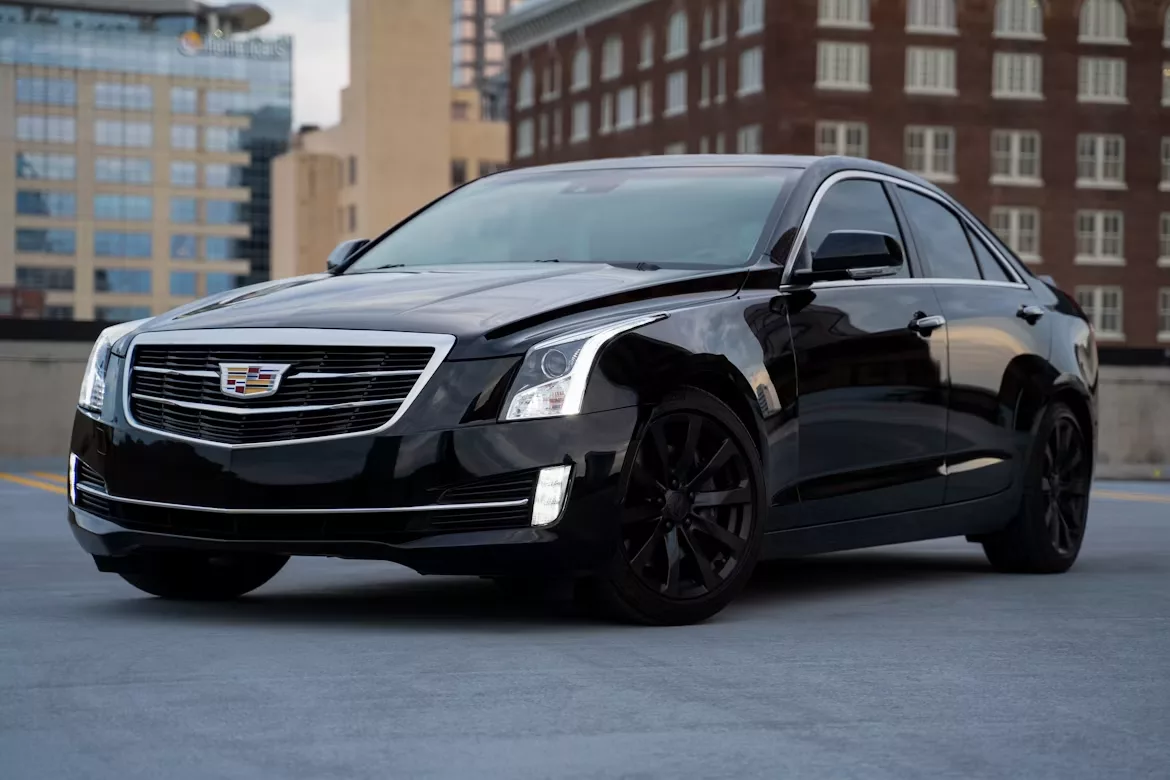
Affordable luxury cars occupy an unusual part of the 2026 car market. A buyer can spend well over $70,000 on a premium SUV, yet several genuine luxury-brand cars and crossovers still start around $35,000 to $45,000. That puts some affordable luxury cars surprisingly close to well-equipped mainstream vehicles, especially once expensive option packages are added to the latter.
The catch is that “affordable” cannot be judged by MSRP alone. A $40,000 luxury car can become a $50,000 purchase after options, destination charges, taxes and dealer fees, while insurance, financing, maintenance, depreciation and fuel continue long after the first payment. The most affordable luxury cars are therefore not necessarily the models with the lowest numbers on the window sticker.
For this list of affordable luxury cars in 2026, the emphasis is on models that combine a relatively accessible entry price with a convincing premium experience. Most start below roughly $47,000 before certain fees and options, although exact pricing conventions differ by manufacturer. The list includes sedans, hatchbacks, SUVs, a hybrid and an EV because buyers searching for affordable luxury cars are no longer choosing from one body style or one type of powertrain.
Best Affordable Luxury Cars in 2026 at a Glance
The best affordable luxury cars in 2026 start at about 40,000 range. Acura currently provides some of the lowest entry prices in this group, while Lexus, Audi, Volvo, Genesis and Mercedes-Benz give buyers very different interpretations of what entry-level luxury should mean. The right choice depends on whether the priority is purchase price, fuel economy, performance, SUV practicality or the experience of owning a particular premium brand.
The table below compares ten affordable luxury cars and crossovers worth putting on a 2026 shopping list. Prices are manufacturer starting figures available at the time of writing and can exclude or include destination charges depending on how the manufacturer publishes its price, so they should be treated as comparison points rather than final out-the-door quotes.
| Affordable luxury car | 2026 starting price* | Type | Why it stands out |
|---|---|---|---|
| Acura Integra | $33,400 | Premium compact liftback | Lowest entry price here, 200 hp, practical hatch |
| Acura ADX | $35,000 | Compact luxury SUV | Accessible SUV pricing, 190-hp turbo engine |
| Lexus UX 300h | $38,850 incl. DPH | Hybrid luxury crossover | Standard hybrid powertrain and low fuel use |
| Audi A3 | $40,100 | Compact luxury sedan | Traditional German premium sedan experience |
| Volvo EX30 | Around $40,000 incl. destination, depending on version | Electric luxury SUV | Compact EV alternative with premium positioning |
| Volvo XC40 | $41,295 | Compact luxury SUV | Practical premium SUV with strong standard equipment |
| Infiniti QX50 | $43,000 | Compact luxury SUV | More space-oriented alternative in this price band |
| Genesis G70 | $43,450 | Luxury sport sedan | 300 hp in the base 2.5T RWD |
| Mercedes-Benz CLA 250 | $42,750 | Luxury four-door coupe | One of the lower-priced entries into Mercedes ownership |
| Lexus IS 350 | $46,895 incl. DPH | Luxury sport sedan | 311 hp and rear- or all-wheel drive |
*Manufacturer starting prices are not directly equivalent. Destination/delivery, taxes, registration, options and dealer charges can be treated differently by each manufacturer and can materially change the final price.
This comparison reveals something important about affordable luxury cars in 2026: the difference between the least and most expensive models on this list is only about $13,500 before adjusting for differences in destination charges. That is significant, but not large enough to make price the only useful ranking factor. A $4,000 or $5,000 premium can sometimes buy substantially more performance, space or standard equipment.
1. Acura Integra – One of the Cheapest Affordable Luxury Cars
The 2026 Acura Integra is one of the clearest answers for buyers who want affordable luxury cars without immediately crossing $40,000. The base Integra starts at $33,400, while the A-Spec starts at $35,950 and the A-Spec with Technology Package at $39,200. That means even a substantially upgraded Integra can remain below the base price of several competitors.
The standard Integra uses a turbocharged 1.5-liter four-cylinder engine producing 200 horsepower and 192 lb-ft of torque. Its liftback body also gives it a practical advantage over a conventional small sedan. For someone who wants one vehicle for commuting, weekend travel and everyday cargo without moving into an SUV, that combination makes the Integra particularly useful.
The financial advantage is the low starting point. A buyer has more room to add desired equipment before reaching the price of some other affordable luxury cars in base form. The danger is assuming that every Integra delivers the same premium experience, because desirable packages can quickly push the price upward.
Best for: Buyers who want the lowest-cost route into a premium-brand car without sacrificing everyday practicality.
What to watch: Compare the equipment on the $33,400 base car with the A-Spec and Technology versions before deciding that the lowest MSRP represents the configuration actually wanted.
2. Acura ADX – An Affordable Luxury SUV Starting at $35,000
The 2026 Acura ADX makes affordable luxury cars relevant to buyers who specifically want a small SUV. Front-wheel-drive versions start at $35,000, while AWD starts at $37,000. The A-Spec moves to $38,200 with front-wheel drive, and the better-equipped A-Spec with Advance Package reaches $42,400 before adding AWD.
Every 2026 ADX uses a turbocharged 1.5-liter four-cylinder engine rated at 190 horsepower and 179 lb-ft of torque. The base model therefore provides the premium badge and compact-SUV format without forcing the buyer into a high-output engine or an expensive performance package. That can be an advantage for someone whose priorities are seating position, daily comfort and urban practicality rather than acceleration figures.
The ADX is also a useful reminder that affordable luxury cars can overlap heavily with mainstream vehicles on price. A well-equipped non-luxury compact SUV can enter similar territory, so the decision should come down to equipment, driving experience, warranty, financing and expected ownership costs rather than the badge alone.
Best for: Buyers looking for one of the lowest-priced new luxury SUVs in 2026.
What to watch: AWD adds $2,000 across the published ADX configurations, so decide whether it is genuinely needed before automatically selecting it.
3. Lexus UX 300h – Affordable Luxury With a Hybrid Powertrain
The Lexus UX 300h is one of the most distinctive affordable luxury cars in 2026 because its standard powertrain is hybrid. The front-wheel-drive UX 300h is priced at $38,850 including the $1,395 delivery, processing and handling fee, while AWD starts at $40,420 on the same pricing basis. Higher trims can take the UX close to $49,000.
That matters for buyers who expect to keep a vehicle for several years and drive substantial mileage. Purchase price is only one part of the cost of affordable luxury cars, and fuel consumption can alter the long-term equation. A hybrid may therefore make more financial sense for a high-mileage driver than a slightly cheaper gasoline model, although the result depends on local fuel prices and actual use.
The UX is compact, so it should not be treated as a substitute for a large family SUV simply because it has a crossover shape. Its strongest case is as a premium urban vehicle for one or two people who value efficiency, maneuverability and the Lexus ownership experience more than maximum cargo space.
Best for: City and commuter drivers who want affordable luxury with hybrid efficiency.
What to watch: Higher UX trims approach the price of larger vehicles, so the value proposition becomes less obvious as options accumulate.
4. Audi A3 – A Traditional German Affordable Luxury Car
The 2026 Audi A3 starts at $40,100, putting a recognizable German luxury sedan within reach of buyers shopping around the $40,000 mark. The A3 is compact, but that smaller footprint is part of its appeal for drivers who want a premium sedan that remains easy to use in dense cities and tight parking spaces. It also avoids forcing buyers into the SUV format that now dominates much of the market.
For affordable luxury cars, brand entry points like the A3 need to be judged carefully. The base MSRP may look competitive, but optional appearance, technology and convenience packages can change the final purchase price quickly. The car that attracts someone at just over $40,000 can therefore become a very different financial proposition once configured.
That does not make the A3 poor value. It simply means buyers should compare actual builds rather than base prices. A $40,100 starting MSRP is useful only if the standard car already contains the features that matter to the buyer.
Best for: Buyers who want a compact German luxury sedan and do not need a larger rear seat or SUV cargo area.
What to watch: Build the exact configuration before comparing the A3 with other affordable luxury cars.
5. Volvo EX30 – An Electric Entry Into Affordable Luxury Cars
The Volvo EX30 gives affordable luxury car buyers an electric option without moving immediately into the $60,000-plus EV market. Current 2026 U.S. pricing places the EX30 around the $40,000 mark including destination for an entry version, depending on configuration. That makes it especially interesting for drivers comparing a premium EV with similarly priced gasoline and hybrid models.
An electric vehicle changes the ownership-cost calculation. There is no gasoline bill, but charging prices vary dramatically between home and public fast charging, insurance can differ from comparable gasoline vehicles, and depreciation should be considered carefully. Buyers also need to determine whether home charging is possible before assuming an EV will automatically be the cheapest affordable luxury car to operate.
The EX30 is small, which can be an advantage in urban environments and a disadvantage for families requiring substantial passenger and cargo room. The smartest purchase therefore depends less on its premium badge and more on whether its size, charging pattern and range fit the driver’s actual routine.
Best for: Drivers who want a small premium EV and can make charging work conveniently.
What to watch: Compare insurance quotes and charging access before comparing monthly payments.
6. Volvo XC40 – One of the Most Practical Affordable Luxury SUVs
The 2026 Volvo XC40 Core starts at $41,295 MSRP, while the Plus starts at $45,295 and the Ultra at $52,645. The Core therefore remains firmly within affordable luxury car territory, while the upper trim demonstrates how quickly a compact luxury SUV can leave it. The $11,350 difference between Core and Ultra is large enough to change the financial decision entirely.
Standard Core equipment includes features such as a power driver’s seat with memory, keyless entry and wireless phone charging. Volvo also lists two years or 20,000 miles, whichever comes first, of complimentary factory scheduled maintenance for eligible 2026 internal-combustion vehicles under its current U.S. program. That does not eliminate long-term maintenance costs, but included service can matter when comparing early ownership expenses.
The XC40 works best for buyers who need SUV practicality but do not want to move into the price range of larger premium crossovers. Its $41,295 starting point is only several thousand dollars above the cheapest affordable luxury cars on this list, yet its body style may better suit families or drivers carrying bulky items.
Best for: Buyers who prioritize practical SUV packaging and a premium cabin over sport-sedan performance.
What to watch: The Ultra exceeds $52,000, so trim selection matters enormously.
7. Infiniti QX50 – More SUV for About $43,000
The Infiniti QX50 is listed from $43,000 before destination and handling, taxes, title, license and options. That places it directly in the middle of this group of affordable luxury cars rather than at the absolute budget end. Its appeal is primarily to shoppers who want crossover practicality and a traditional premium-brand experience.
At this price point, however, comparison shopping becomes especially important. Moving from the mid-$30,000s to $43,000 represents thousands of dollars that could otherwise remain in savings, reduce the loan principal or pay for several years of insurance and maintenance. The QX50 therefore needs to justify the premium through the space, comfort and features that an individual buyer actually uses.
Do not compare the QX50 with a $35,000 competitor solely through monthly payments. Longer loan terms can make a more expensive car appear deceptively close in monthly cost. The purchase price, interest paid and total amount financed remain more useful than the payment alone.
Best for: Buyers who want a premium crossover and value space more than having the lowest possible entry price.
What to watch: Infiniti states that its published MSRP excludes destination and handling of up to $2,275, so use an out-the-door quote for a fair comparison.
8. Mercedes-Benz CLA 250 – A Mercedes Below $45,000
The 2026 Mercedes-Benz CLA 250 Coupe carries an MSRP of $42,750, while the CLA 250 4MATIC is $44,750. That puts a new Mercedes within the same broad price band as several affordable luxury cars from Acura, Volvo, Audi, Infiniti and Genesis. For buyers who care strongly about the brand experience, the CLA is an obvious model to investigate.
The financial question is whether the entry price survives the configuration process. Premium manufacturers often offer extensive option lists, and adding desired technology, appearance and convenience equipment can materially increase the final price. A buyer attracted by a $42,750 headline therefore needs to compare the actual vehicle being ordered, not an imaginary base configuration.
The CLA is strongest for buyers who want a compact premium four-door and place a high value on Mercedes design and branding. Someone focused primarily on horsepower-per-dollar, interior space or the lowest possible ownership cost may find stronger alternatives elsewhere in this affordable luxury cars list.
Best for: Buyers who specifically want an accessible new Mercedes-Benz.
What to watch: Compare the configured MSRP and out-the-door price, not simply the advertised base MSRP.
9. Genesis G70 – 300 Horsepower for $43,450
The 2026 Genesis G70 is one of the performance standouts among affordable luxury cars. The 2.5T rear-wheel-drive model starts at $43,450 and produces 300 horsepower and 311 lb-ft of torque. AWD raises the starting MSRP to $45,550, while higher Prestige and 3.3T versions can move beyond $50,000.
That base specification makes the G70 particularly interesting when price and performance are considered together. A buyer does not need to select the most expensive engine simply to obtain substantial power. Heated front seats, 19-inch wheels and a range of driver-assistance features are also listed for the 2.5T RWD.
There is an important pricing detail, however. Genesis lists $1,395 freight separately in its configurator, taking the illustrated base 2.5T RWD build from $43,450 MSRP to $44,845 before taxes and other applicable costs. That is exactly why affordable luxury cars should be compared using final quotes rather than headline figures.
Best for: Drivers who want sport-sedan performance without paying for a top-tier luxury model.
What to watch: Freight and higher trims move the transaction beyond the advertised $43,450 starting figure.
10. Lexus IS 350 – Affordable Luxury With 311 Horsepower
The 2026 Lexus IS 350 F SPORT Design starts at $46,895 including delivery, processing and handling, making it the most expensive entry on this list but still relevant to shoppers setting an approximate $50,000 ceiling. It produces 311 horsepower, offers rear- or all-wheel drive and retains the proportions of a traditional sport sedan. AWD increases the F SPORT Design price to $48,895.
The IS illustrates why an affordable luxury car does not necessarily need to be the cheapest. Someone who plans to keep the vehicle for years may care more about getting the desired powertrain, body style and equipment than saving several thousand dollars at purchase. Conversely, a buyer stretching a budget merely to obtain the badge should treat the nearly $47,000 starting point very differently.
The best way to evaluate the IS is against the Genesis G70 and other premium sport sedans rather than against the cheapest model on this list. The objective is not to declare one universally best car but to identify which affordable luxury cars provide the right combination for a particular budget.
Best for: Buyers who want a traditional premium sport sedan with more than 300 horsepower.
What to watch: At nearly $47,000 before taxes and registration, “affordable” becomes relative.
Which Affordable Luxury Cars Under $40,000 Are Available in 2026?
New affordable luxury cars under $40,000 still exist in 2026, but the list is much shorter once destination charges and desired equipment are considered. The Acura Integra and ADX are the clearest examples, while the Lexus UX 300h also fits below $40,000 using its published price that includes delivery, processing and handling. Certain EV configurations can sit near the threshold rather than comfortably below it.
The distinction between “starts under $40,000” and “costs under 40,000 MSRP beyond that limit. A buyer with a hard $40,000 total budget should therefore shop below the ceiling rather than at it.
This is one of the most common mistakes when comparing affordable luxury cars. If $40,000 is the maximum total purchase budget, a vehicle with a $39,900 base MSRP is usually not a $40,000 car.
Affordable Luxury Cars Under $50,000 Give Buyers Far More Choice
A $50,000 pre-tax budget opens most of the affordable luxury cars in this comparison, including better-equipped versions of some models. It can cover the base Genesis G70, Mercedes-Benz CLA, Lexus IS 350, Audi A3, Volvo XC40 and multiple Acura or Lexus UX configurations. That does not mean spending the entire $50,000 is financially sensible.
The difference between a $35,000 and $50,000 vehicle is $15,000 before financing costs. If that extra amount is borrowed, interest increases the gap further. If it is paid in cash, it represents $15,000 that can no longer serve another financial goal.
A car budget should therefore be a maximum, not a target. WeaveMoney’s guide to financial short-term goals includes examples such as building emergency savings and creating a dedicated car fund, both of which are useful before turning a maximum approval amount into a purchase budget.
The smartest affordable luxury car is often the model that leaves enough financial room for everything that happens after the dealership.
What Does an Affordable Luxury Car Really Cost?
An affordable luxury car costs more than its MSRP because ownership also includes taxes, registration, financing, insurance, fuel or electricity, maintenance, tires, repairs and depreciation. Some of those costs can differ substantially from an equivalently priced mainstream vehicle. A low monthly payment can hide them because the lender finances the purchase, not the next set of tires or next year’s insurance premium.
The right calculation begins before the test drive. Estimate the cash needed at purchase, monthly loan cost if financing, insurance, energy, scheduled maintenance and a reasonable reserve for unexpected expenses. Depreciation also matters even though it does not arrive as a monthly bill, because it affects how much of the purchase price can eventually be recovered when the car is sold.
| Cost | Why it matters | What to check |
|---|---|---|
| Purchase price | Determines the starting financial commitment | Negotiated vehicle price, not just MSRP |
| Destination/freight | Can add well over $1,000 | Whether included in advertised price |
| Sales tax | Can add thousands | Local tax rate and taxable fees |
| Registration/title | Required ownership cost | State/local fees |
| Financing interest | Raises total purchase cost | APR, term and total interest |
| Insurance | Premium models can cost more to insure | Get quotes before buying |
| Fuel/electricity | Repeats for as long as the car is driven | Fuel grade, mpg, charging access |
| Maintenance | Premium parts and labor can be costly | Service schedule and included maintenance |
| Tires | Larger performance tires can be expensive | Size, type and expected replacement cost |
| Repairs | Becomes more important after warranty | Warranty length and repair complexity |
| Depreciation | Often one of the largest ownership costs | Expected resale value and ownership period |
No single affordable luxury car wins every category. A hybrid may cost more upfront but use less fuel, while an EV may reduce gasoline spending but require a workable charging setup. A performance sedan may offer more power for the money but use more expensive tires or fuel.
MSRP vs Out-the-Door Price on Affordable Luxury Cars
MSRP is not the same as the amount a buyer ultimately pays. The out-the-door price generally incorporates the negotiated vehicle price plus applicable destination charges, taxes, title, registration, dealer fees and installed extras. This is the number that matters when comparing affordable luxury cars at different dealerships.
Manufacturers also publish prices differently. Lexus, for example, explicitly publishes the 2026 UX 300h’s $38,850 figure including a $1,395 delivery, processing and handling fee. Genesis shows a $43,450 base MSRP for the G70 2.5T RWD and separately adds $1,395 freight in its build summary.
That can make a simple price table look more precise than it really is. Always normalize competing quotes to the same basis before deciding which affordable luxury car is cheaper.
How Much Car Can You Actually Afford?
An affordable luxury car is affordable only if the full ownership cost fits comfortably alongside other financial priorities. A lender’s approval is not an affordability test. Approval answers whether a lender is prepared to extend credit under specified terms, while affordability asks whether the payment and ownership costs leave enough room for housing, food, insurance, savings, debt payments and unexpected expenses.
Suppose two buyers both qualify for a $50,000 auto loan. One has stable income, no expensive debt and substantial emergency savings. The other has credit-card balances, little cash savings and unstable monthly income. The same vehicle can be manageable for the first and financially dangerous for the second.
Before buying any of these affordable luxury cars, preserve a cash buffer for genuine emergencies. The WeaveMoney family budgeting guide explains how even a modest starter emergency fund can reduce the need to rely immediately on debt after an unexpected expense.
A luxury vehicle should not consume the money intended to protect the household from the next financial shock.
Do Not Judge Affordable Luxury Cars by Monthly Payment Alone
Monthly payment is one of the easiest numbers to manipulate when selling a car. A dealer or lender can reduce the payment by extending the loan term, increasing the down payment or changing the amount financed. None of those changes necessarily makes the vehicle cheaper.
Consider a simplified example before interest and fees. Financing $40,000 over 48 months requires about $833 per month, while spreading the same $40,000 across 72 months lowers the principal portion to about $556 per month. The car did not become $277 cheaper each month in an economic sense – repayment simply lasts two years longer.
Interest makes long terms more consequential. A longer loan can increase total interest and keep the borrower owing money on a depreciating vehicle for more years. When comparing affordable luxury cars, compare purchase price, APR, loan term, amount financed and total of payments – not payment alone.
Insurance Can Change Which Affordable Luxury Car Is Cheapest
Insurance should be priced before buying an affordable luxury car because two vehicles with similar MSRPs can produce different premiums. Insurers can consider factors such as repair costs, claims history, theft risk, safety characteristics, location, driver profile and coverage selections. The badge alone does not determine the quote.
Request comparable quotes for the exact models being considered. Use the same driver, address, deductibles, limits and optional coverages so the comparison is meaningful. A difference of even $75 per month represents $900 per year and $4,500 over five years if the gap remained unchanged.
This is especially important when moving from a mainstream vehicle to a luxury model. A purchase that fits the car-payment budget can become uncomfortable after insurance is added.
Maintenance Is Where “Cheap Luxury” Can Become Expensive
Affordable luxury cars can become expensive when the purchase price is treated as the end of the calculation. Premium vehicles may use larger wheels, performance tires, specialized components or more complex technology, and dealer labor rates can vary substantially. These costs matter more as a car ages beyond complimentary maintenance periods and warranty coverage.
Before buying, inspect the manufacturer’s scheduled-maintenance requirements and price several common items locally. Check oil service where applicable, brake replacement, tires, battery replacement, filters and major scheduled services. For an EV, the maintenance profile is different, but tires, suspension, cabin systems and other components still exist.
A slightly more expensive affordable luxury car with predictable ownership costs can be preferable to a deeply depreciated used model that immediately needs several thousand dollars of work. The purchase price should never be considered in isolation.
Premium Fuel Can Quietly Add to the Cost of Affordable Luxury Cars
Fuel requirements deserve attention because affordable luxury cars use different engines and manufacturer recommendations. Some premium models are designed around higher-octane fuel, while hybrids and EVs create entirely different energy-cost calculations. The difference may look small at one fill-up but accumulates across years of driving.
A buyer covering 15,000 miles annually will care much more about fuel economy and fuel grade than someone driving 4,000 miles. Likewise, an EV owner with inexpensive home charging can have a very different experience from someone dependent on public fast chargers. Use personal mileage and local energy prices rather than generic assumptions.
The right comparison is annual energy cost, not simply mpg or an EV label. That keeps affordable luxury cars comparable across gasoline, hybrid and electric powertrains.
New vs Used Affordable Luxury Cars – Which Is the Better Deal?
Used affordable luxury cars can offer substantially more vehicle for the same purchase price, but the lower price comes with different risks. Depreciation can put a three- or four-year-old premium model within reach of buyers who could not justify it new. At the same time, warranty coverage may be shorter or gone, and maintenance or repairs may become the new owner’s responsibility.
A used luxury car should therefore be evaluated on service history, condition, mileage, accident history, remaining warranty and the cost of upcoming maintenance. A pre-purchase inspection by a qualified independent professional can be especially valuable on an expensive or complex vehicle. A low used price is not automatically evidence of value.
New affordable luxury cars offer a different trade-off: higher initial cost and potentially greater early depreciation in exchange for full warranty coverage, known history and access to current technology. Neither route is universally better.
When a Used Luxury Car Makes More Sense
A used luxury car can make sense when depreciation has already removed a substantial portion of the original price and the buyer has enough cash reserves to handle maintenance. It can also be attractive when a well-documented certified pre-owned vehicle includes meaningful warranty coverage. The key is to buy the condition and ownership history, not merely the badge.
For example, a buyer with a $35,000 budget may be able to choose between a new entry-level premium car and a used model that originally occupied a much higher segment. The used vehicle may provide better materials, performance and equipment. It may also have significantly more expensive replacement parts.
Do not spend the entire budget on the purchase price of a used luxury car. Leave room for inspection, tires, maintenance, registration, insurance and repairs.
When a New Affordable Luxury Car Makes More Sense
A new affordable luxury car makes more sense when predictable early ownership costs, full warranty coverage and current safety or technology features are priorities. It can also be attractive when manufacturer financing or lease incentives materially improve the transaction. Those offers change frequently, so the comparison should use current terms rather than an assumed discount.
New cars also make it easier to know exactly how the vehicle has been maintained. There is no unknown previous owner, deferred maintenance or hidden wear accumulated over several years.
The disadvantage is depreciation. A new vehicle can lose value even while the owner is still making payments, which becomes particularly important for buyers who change cars frequently.
Sedan or SUV – Which Affordable Luxury Car Is Better Value?
A sedan can provide more performance or equipment for the money, while an SUV can justify its premium through cargo flexibility, seating position and practicality. The better value depends on what the buyer actually needs. Paying thousands more for an SUV solely because crossovers are popular does not automatically improve the ownership experience.
The Integra, A3, G70, CLA and IS appeal to drivers who still prefer lower passenger cars. The ADX, UX, XC40, QX50 and EX30 address the much larger crossover audience. Within both groups, however, size varies considerably.
Before choosing, test the rear seats, cargo area and parking footprint with real needs in mind. The cheapest vehicle that fails a practical requirement is not the most affordable choice because replacing it early can be far more expensive.
Are Affordable Luxury Cars Worth It?
Affordable luxury cars can be worth the premium when the buyer genuinely values the features that distinguish them from mainstream alternatives. Better materials, quieter cabins, stronger performance, distinctive design, advanced technology, dealership experience and brand appeal all have legitimate value. The mistake is assuming that a luxury badge automatically makes a car objectively better for every buyer.
Mainstream cars have also become much more sophisticated. A high-spec mainstream sedan or SUV can offer heated and ventilated seats, large displays, advanced driver assistance, premium audio and strong powertrains. In some cases, $40,000 spent on a mainstream model buys substantially more equipment or space than the same amount spent at a luxury brand.
That makes a back-to-back test drive essential. Compare an affordable luxury car not only with other luxury vehicles but also with the best mainstream alternative at the same out-the-door price.
Pros and Cons of Affordable Luxury Cars
Affordable luxury cars provide access to premium brands and features without the pricing of flagship models, but entry-level luxury involves compromises. Some models use smaller cabins, less powerful base engines or fewer standard features to reach their attractive starting prices. Others become much less affordable once popular packages are selected.
The major advantages and disadvantages are straightforward:
Pros
- Lower entry price into a premium brand.
- Access to upscale design, materials and technology.
- Some models deliver strong performance for the money.
- Compact luxury cars can be easier to park and more efficient than larger premium vehicles.
- New vehicles generally include full factory warranty coverage.
- Buyers now have gasoline, hybrid and electric affordable luxury cars to choose from.
Cons
- Options can increase the price dramatically.
- Insurance may cost more than expected.
- Premium fuel, tires, parts and service can raise ownership costs.
- Entry-level models may lack features buyers associate with luxury.
- Depreciation can make frequent replacement expensive.
- A well-equipped mainstream vehicle may offer more equipment for the same money.
The balance depends on how long the vehicle will be kept and which features are genuinely valuable. A buyer paying thousands extra for equipment that is rarely used is not receiving better value simply because the car is luxurious.
10 Mistakes to Avoid When Buying Affordable Luxury Cars
The biggest mistakes with affordable luxury cars happen when buyers focus on getting the badge rather than understanding the transaction. A vehicle that appears affordable in an advertisement can become expensive through options, financing and ownership costs. Avoiding several predictable mistakes makes the comparison far more realistic.
- Shopping by monthly payment instead of total price. A long loan can make an expensive vehicle look deceptively affordable.
- Comparing MSRP without destination charges. Manufacturers do not always present starting prices on exactly the same basis.
- Ignoring insurance until after signing. Obtain comparable quotes first.
- Automatically choosing the highest trim. Decide which features are actually worth paying for.
- Using the entire cash reserve as a down payment. Preserve emergency savings.
- Assuming a luxury badge guarantees better value. Compare mainstream alternatives at the same price.
- Ignoring fuel requirements and annual mileage. Small per-gallon differences accumulate.
- Buying a used luxury car without an inspection. A low purchase price can hide expensive deferred maintenance.
- Taking a longer loan only to reach a desired payment. Calculate total interest and total payments.
- Forgetting depreciation. Resale value matters even when there is no monthly depreciation bill.
Avoiding these mistakes does not make every affordable luxury car inexpensive. It does make it easier to distinguish genuine value from a purchase that only looks affordable at first glance.
How to Choose the Best Affordable Luxury Car for Your Budget
The best affordable luxury car is the one that satisfies real transportation needs without weakening the rest of the household’s finances. Start with a total budget, then compare vehicles within it instead of choosing a model first and manipulating financing until the payment fits. This reverses one of the most common mistakes in car shopping.
Use this process before visiting a dealership:
- Set a maximum out-the-door budget.
- Decide whether sedan, hatchback, SUV, hybrid or EV best fits actual use.
- Shortlist three to five affordable luxury cars.
- Price the exact trims and options required.
- Get insurance quotes for each finalist.
- Estimate annual fuel or charging costs.
- Check scheduled maintenance and tire prices.
- Compare financing by APR, term and total payments.
- Test-drive the luxury model and a mainstream alternative at the same price.
- Choose only after comparing the full ownership picture.
This approach may lead to the cheapest vehicle, but it does not have to. Spending somewhat more can be rational when it buys features, space or performance that will be used for years. The important distinction is between paying more deliberately and stretching a budget simply to own a premium badge.
Which Affordable Luxury Car Is the Best Buy in 2026?
There is no single best affordable luxury car for every buyer in 2026. The Acura Integra is particularly compelling for keeping the initial price low, while the Acura ADX provides an accessible route into a premium SUV. The Lexus UX 300h stands out for buyers prioritizing hybrid efficiency, and the Genesis G70 offers unusually strong base-model performance.
The Audi A3 and Mercedes-Benz CLA appeal to shoppers specifically seeking compact German luxury cars. The Volvo XC40 is a practical premium crossover, while the Lexus IS 350 suits drivers willing to spend closer to $50,000 for a more powerful traditional sport sedan. EV shoppers have a different calculation, making the Volvo EX30 worth considering where home charging and its compact dimensions make sense.
The final choice should come after comparing actual dealer quotes, insurance and financing rather than simply ranking badges. A $35,000 affordable luxury car that fits comfortably into the budget is a better financial purchase than a $50,000 model that leaves no room for savings, repairs or an income interruption.
FAQ About Affordable Luxury Cars in 2026
The best affordable luxury cars in 2026 include the Acura Integra, Acura ADX, Lexus UX 300h, Audi A3, Volvo XC40, Genesis G70, Mercedes-Benz CLA and Lexus IS 350. The best individual choice depends on budget, body style, powertrain, insurance and expected ownership costs.
Among the affordable luxury cars compared here, the 2026 Acura Integra has the lowest published starting price at $33,400. The final out-the-door price will be higher after applicable destination charges, taxes, registration, options and fees.
The 2026 Acura Integra starts at $33,400, the Acura ADX at $35,000, and the Lexus UX 300h is published at $38,850 including its delivery, processing and handling fee. Actual dealer transaction and out-the-door prices can exceed those starting figures.
Affordable luxury SUVs and crossovers include the Acura ADX, Lexus UX 300h, Volvo XC40, Volvo EX30 and Infiniti QX50. Their starting prices span roughly the mid- 40,000s before accounting for differences in destination charges and options.
Yes. Many affordable luxury cars start below $50,000, including the Acura Integra, Audi A3, Genesis G70, Mercedes-Benz CLA and Lexus IS 350. Several premium compact SUVs also fall below that threshold in base form.
They can be more expensive to maintain than mainstream alternatives because parts, labor, tires and specialized components may cost more. The difference varies greatly by model, powertrain, warranty coverage and where maintenance is performed.
They can be, but there is no universal rule. Insurance depends on the exact vehicle as well as the driver, location, claims history, coverage limits, deductibles and other factors, so obtain quotes before purchasing.
A used luxury car can provide more equipment and performance for the purchase price because someone else has absorbed part of the depreciation. A new affordable luxury car offers full warranty coverage, known history and more predictable early ownership, so the better choice depends on condition, savings and tolerance for repair risk.
The Lexus UX 300h is especially relevant to fuel-conscious shoppers because it uses a hybrid powertrain. Actual fuel costs depend on mileage, driving conditions and local fuel prices, so compare annual energy expenses rather than purchase price alone.
Among the affordable luxury cars highlighted here, the Genesis G70 2.5T RWD provides 300 horsepower from a $43,450 starting MSRP, while the 2026 Lexus IS 350 produces 311 horsepower from $46,895 including delivery, processing and handling. Performance should still be weighed against fuel, insurance and other ownership costs.
The Acura Integra is a strong option for buyers who want a premium-brand car below $40,000 because even several upgraded configurations remain under that threshold before applicable fees. The Lexus UX 300h is an alternative for buyers who prefer a hybrid crossover.
Yes, $40,000 is enough to reach several new affordable luxury cars at MSRP in 2026. However, a hard $40,000 out-the-door budget requires shopping below a $40,000 sticker price because taxes, destination, registration and fees can push the final cost higher.
Not necessarily, but $50,000 should be treated as a financial limit rather than a target. Buyers should compare what an additional $5,000 or $10,000 actually provides and whether spending it compromises savings or other financial goals.
Several models on this list offer AWD, including the Acura ADX, Lexus UX 300h, Mercedes-Benz CLA and Lexus IS 350, while the Volvo XC40 also provides an SUV-oriented option. AWD availability and pricing depend on the exact trim and configuration.
A longer term can reduce the monthly payment but may increase total interest and keep the borrower in debt on a depreciating asset for longer. Compare APR, total interest, total payments and expected ownership period rather than selecting a loan solely because the monthly payment looks manageable.
There is no universal down-payment percentage that works for every buyer. A larger down payment can reduce the amount financed and potentially lower interest expense, but using most emergency savings to increase the down payment can create a different financial risk.
They can be when warranty coverage, current technology, predictable history and lower near-term repair uncertainty are valuable to the buyer. The trade-off is paying the new-car price and accepting depreciation that occurs after purchase.
Check destination charges, taxes, registration, dealer fees, financing interest, insurance, fuel or electricity, maintenance, tires, repairs and depreciation. Optional packages can also turn an apparently affordable base model into a substantially more expensive vehicle.
The biggest mistake is deciding affordability from the advertised monthly payment or starting MSRP alone. The financially meaningful number is the total cost of acquiring and owning the vehicle while still maintaining savings and meeting other obligations.
Add the car payment, insurance, fuel or charging, maintenance reserve and other recurring vehicle costs to the monthly budget. Then check whether emergency savings, debt payments, housing costs and other financial goals remain comfortably funded. If the car requires sacrificing essential savings or relying on debt for routine expenses, the premium badge is not affordable for that budget.
