en
en



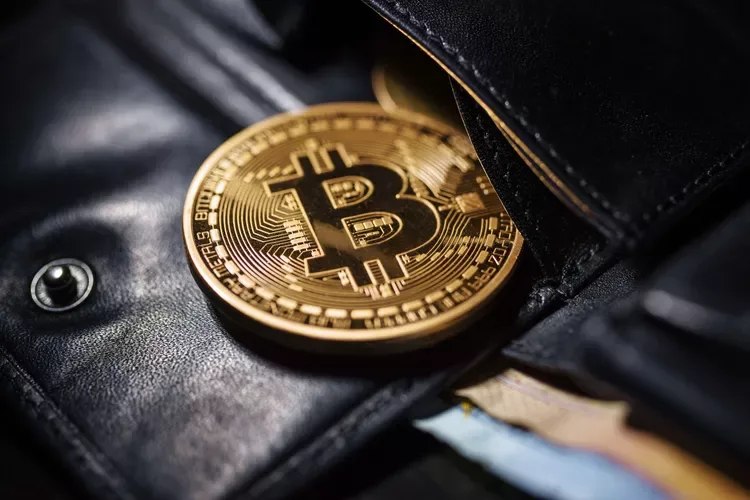
The best crypto wallet in 2026 needs to do much more than display a balance and generate an address. A useful wallet should give its owner control over private keys, support the networks they actually use, make transaction costs understandable and reduce the chance of approving a dangerous transaction. For people using DeFi, swaps or multiple blockchains, compatibility and transaction tools matter almost as much as the basic storage function.
Among widely available self-custody software wallets, MetaMask, Trust Wallet and OKX Wallet cover three particularly useful scenarios. MetaMask is the strongest choice here for users deeply involved in Web3 and DeFi, Trust Wallet stands out for broad multichain access and an approachable mobile experience, while OKX Wallet is particularly compelling for active on-chain trading and DEX use. None is automatically the best crypto wallet for every person, and none eliminates the risks that come with self-custody.
That distinction matters because a crypto wallet does not literally keep coins inside an app. It manages the credentials that allow a user to control assets recorded on blockchains. With a self-custody wallet, losing or exposing those credentials can be far more serious than forgetting the password to an ordinary online account.
Crypto assets are volatile and self-custody involves the risk of irreversible loss. This article is informational and does not constitute financial or investment advice.
Best crypto wallet 2026 – quick comparison
For most people, the best crypto wallet can be narrowed down by answering three questions: which blockchains will be used, how frequently the wallet will interact with Web3 applications, and whether the priority is simplicity or advanced trading functionality. All three wallets below are self-custody products, but their strengths are different enough to make the choice meaningful.
| Wallet | Best suited to | Custody | Platforms | Network coverage | Built-in swaps | Key advantage |
|---|---|---|---|---|---|---|
| MetaMask | DeFi and Web3 users | Self-custody | Mobile and browser | Ethereum/EVM plus native multichain expansion including Bitcoin, Solana and TRON | Yes | Deep Web3 integration |
| Trust Wallet | Beginners and multichain users | Self-custody | iOS, Android and browser extension | 100+ blockchain networks | Yes | Broad network coverage in a relatively accessible interface |
| OKX Wallet | Active multichain and DEX users | Self-custody | Mobile and browser | 100+ networks | Yes | Strong integrated on-chain trading ecosystem |
There is no universal winner in every column. A wallet that is excellent for daily DeFi activity may still be a poor place to keep a large long-term balance, while the simplest wallet for a newcomer may lack the workflow an active on-chain trader wants.
1. MetaMask – best crypto wallet for Web3 and DeFi
MetaMask is the best crypto wallet of these three for users whose main priority is interacting with Web3 applications, particularly across Ethereum and EVM ecosystems. Its position is no longer limited to an Ethereum-only experience: MetaMask’s multichain expansion now includes native Bitcoin, Solana and TRON support alongside Ethereum, Base, Sei and EVM-compatible networks. TRON support, for example, allows users to manage TRX and TRON-based assets such as USDT, while TRX staking is available through MetaMask Mobile.
The major advantage is that MetaMask can act as more than a place to receive and send crypto. Swaps, bridging and connections to decentralized applications can be handled without moving to a centralized exchange for every action. That makes it particularly relevant to users who routinely interact with DeFi protocols, tokens and multiple Web3 services.
At the same time, more functionality creates more decisions. Network selection, gas, token approvals, spending limits, slippage and smart-contract interactions can make MetaMask less immediately intuitive than a basic wallet whose main purpose is receiving and holding assets. Beginners should therefore understand what they are signing rather than treating every wallet confirmation as a routine pop-up.
MetaMask fees are important when choosing the best crypto wallet
MetaMask itself can be installed without an upfront purchase price, but using the wallet is not the same as transacting for free. Blockchain network fees can apply when sending assets or interacting with smart contracts, while MetaMask Swaps currently incorporates a 0.875% MetaMask fee into swap quotes. The final cost of a swap can therefore include the quoted exchange rate, the network fee and the MetaMask service fee.
That 0.875% deserves attention if swaps will be frequent or large. On a hypothetical $1,000 swap, 0.875% corresponds to $8.75 before considering network costs and any effect from slippage. It does not mean every MetaMask transaction costs 0.875% – the fee applies to MetaMask Swaps, while ordinary blockchain transfers have their own network-cost structure.
MetaMask also sources bridge routes through multiple providers and aggregators, including LI.FI, Socket, Across, Stargate and others. This can make moving assets between supported networks more convenient, but users should still examine the route, estimated output and network costs before confirming a transaction.
Where MetaMask is strongest
MetaMask makes the most sense as the best crypto wallet for someone who expects to use crypto rather than simply leave it untouched. Its Web3 connectivity, EVM heritage, custom-network functionality and expanding native multichain support make it flexible enough for considerably more than basic storage. Bitcoin, Solana and TRON integration also addresses one of the historical weaknesses of treating MetaMask primarily as an Ethereum-focused wallet.
Its flexibility is also useful for token holders. Anyone researching assets before moving them into self-custody can see an example of wallet compatibility in WeaveMoney’s guide to how to buy and store Shiba Inu coin, which discusses MetaMask and Trust Wallet as storage options for Ethereum-compatible assets.
That flexibility should not be mistaken for automatic safety. A self-custody wallet cannot prevent every bad decision made by its owner, particularly when a user reveals a recovery phrase, interacts with a fraudulent site or authorizes a malicious transaction.
MetaMask strengths and limitations
The differences become clearer when MetaMask is assessed as a daily wallet rather than simply by counting features.
| Strengths | Limitations |
|---|---|
| Strong Web3 and DeFi compatibility | Feature depth can create a steeper learning curve for first-time users |
| Native support has expanded beyond EVM networks | Users still need to understand networks, gas, approvals and transaction signing |
| Built-in swaps and bridging | MetaMask Swaps carries a 0.875% service fee |
| Suitable for active interaction with dApps | A hot wallet remains exposed to risks associated with an internet-connected device |
| Mobile and browser access | Self-custody makes recovery-phrase protection the user’s responsibility |
The practical experience is therefore strongest for someone comfortable with Web3 terminology. MetaMask can simplify access to decentralized services, but it does not make the underlying blockchain mechanics disappear. For active DeFi users, that trade-off is often worthwhile; for someone who only wants long-term storage, much of the functionality may be unnecessary.
2. Trust Wallet – best crypto wallet for beginners and multichain use
Trust Wallet is the best crypto wallet in this ranking for people who want broad blockchain support without starting with an especially complex workflow. The wallet is self-custodial, is available on iOS and Android as well as through a browser extension, and its official product information states that it integrates 100+ blockchains, including Bitcoin, Ethereum, Solana and BNB Smart Chain. It also combines asset management with swaps, staking for supported assets and access to decentralized applications.
That breadth matters for beginners more than it might initially appear. A person who starts with Bitcoin or Ethereum can later add assets from other ecosystems without necessarily creating a completely separate wallet application for each blockchain. This makes Trust Wallet a practical candidate for the best crypto wallet when portfolio diversity and mobile convenience matter more than highly specialized DeFi workflows.
Trust Wallet also keeps private keys under the user’s control rather than acting as a custodian. This is an important distinction from keeping assets in an account controlled by a centralized platform. Self-custody increases control, but it also transfers much of the responsibility for backup and account security to the wallet owner.
Trust Wallet security tools add useful checks
Trust Wallet includes a Security Scanner designed to assess transactions and warn about potential risks such as malicious addresses or unsafe decentralized applications. According to Trust Wallet’s security documentation, the scanner evaluates multiple data points and is integrated into the mobile application without requiring manual activation. The company also describes recurring internal and third-party security audits of its application and infrastructure.
These protections are useful, but they do not turn Trust Wallet into an error-proof environment. A warning can help a user identify a suspicious interaction, yet the owner still controls the keys and ultimately decides which transactions to authorize. The best crypto wallet security strategy therefore still includes protecting the recovery phrase offline, checking addresses and avoiding unknown links.
For newcomers coming from centralized services, the difference between a wallet and an exchange is especially important. WeaveMoney’s Binance cryptocurrency exchange guide explains the account-based exchange model, while a self-custody wallet such as Trust Wallet puts key control directly in the user’s hands.
Trust Wallet fees depend on what you do
Trust Wallet should not simply be described as a “free crypto wallet” without context. Installing the wallet does not remove blockchain transaction costs: network gas fees can apply when sending tokens, swapping assets or interacting with dApps, and those costs change according to the blockchain and current network conditions. Trust Wallet explains that gas is generally paid in the relevant network’s native token.
There are also transaction-specific promotions and conditions. As of September 2026, Trust Wallet offers 0% Trust Wallet swap fees on eligible same-chain stablecoin swaps across specified supported networks other than Ethereum, while blockchain gas fees still apply. Eligible assets include specified versions of USDT, USDC, EURC, USDS, DAI and U, with supported networks including BNB Chain, Solana, Arbitrum, Polygon, Base, Optimism and Avalanche.
A separate current offer covers eligible staked and wrapped asset pairs on Ethereum, Solana and BNB Chain with a 0% Trust Wallet swap fee, again without removing the underlying network fee. Because eligibility is pair- and network-specific, 0% should never be interpreted as meaning every Trust Wallet swap is free.
Trust Wallet strengths and limitations
Trust Wallet’s main advantage in the best crypto wallet comparison is that broad network support does not require the user to start with an advanced trading-oriented interface. It can serve as a first self-custody wallet while still leaving room for staking, swaps and Web3 exploration as the user’s needs grow.
| Strengths | Limitations |
|---|---|
| 100+ integrated blockchains | Broad functionality still requires users to understand different networks |
| Mobile apps and browser extension | Network gas fees remain unavoidable for many blockchain actions |
| Built-in Security Scanner | Security warnings cannot protect against every user mistake or scam |
| Built-in swaps and staking for supported assets | Swap costs and eligibility can vary by asset, network and route |
| Self-custody | Recovery and private-key protection remain the user’s responsibility |
The day-to-day experience is consequently easier to approach than the feature list might suggest. A beginner can initially use only receiving, sending and portfolio functions, then move into swaps, staking and dApps later. That scalability is the strongest reason to consider Trust Wallet the best crypto wallet for a newcomer who expects to hold assets across several ecosystems.
3. OKX Wallet – best crypto wallet for active multichain trading
OKX Wallet is the best crypto wallet among these three for users who want self-custody closely combined with multichain DEX and Web3 functionality. Official OKX documentation describes support for more than 100 networks, spanning EVM chains as well as Bitcoin, Solana, TON, Sui, Aptos, Cosmos, TRON and other ecosystems. The wallet is available through mobile devices and web browsers, allowing one wallet environment to cover a particularly broad range of on-chain activity.
Its distinguishing feature is not simply the number of supported networks. OKX Wallet is built around access to decentralized trading, DeFi, NFTs and dApps, which makes it more relevant to someone who actively moves assets and searches for on-chain routes than to a user who only wants a basic place to hold Bitcoin. Official documentation also describes access to more than 1,000 dApp protocols across supported networks.
As with MetaMask and Trust Wallet, OKX Wallet’s self-custody structure means users control their assets and must protect their own credentials. OKX specifically warns users to safeguard private keys and mnemonic phrases, avoid unfamiliar links and authorizations, and verify wallet addresses before transactions.
OKX Wallet DEX fees range according to the token pair
OKX’s current DEX interface fee structure is particularly important for an accurate best crypto wallet comparison because there is no single fee that applies to every swap. The official fee schedule lists interface-fee rates ranging from 0% to 0.5%, depending on the token groups involved. Current rates include 0% for “Other <> Other” pairs, 0.1% for Group 1 <> Group 1, 0.25% for Group 1 <> Group 2 and Group 2 <> Group 2, and 0.5% when Group 1 or Group 2 is paired with an “Other” token.
These are interface fees for using OKX DEX to access transactions on third-party decentralized exchanges. They should not be confused with blockchain network costs, and OKX notes that fees can differ across Web3 products. Token classifications can also change, so the actual transaction preview is more useful than assuming a fixed percentage from a previous trade.
For active users, this variable structure creates both an opportunity and an extra step. Some pairs can carry no OKX DEX interface fee, while others can reach 0.5%. Anyone making frequent swaps should therefore compare the final expected output, not merely the headline interface-fee percentage.
Why OKX Wallet works particularly well for active users
The best crypto wallet for an active trader needs to reduce friction between holding assets and interacting with on-chain markets. OKX Wallet combines multichain asset management with DEX access and a large Web3 ecosystem, reducing the need to maintain unrelated wallets for every supported chain. That can be valuable for users moving between Ethereum-compatible networks, Bitcoin, Solana, TON and other ecosystems.
The trade-off is complexity. Someone making a first Bitcoin purchase may have little need for extensive DEX routing or access to hundreds of protocols, while an experienced on-chain user can make much more use of those capabilities. This is why OKX Wallet ranks highly here for a particular scenario rather than being labelled the best crypto wallet for everyone.
The distinction between decentralized wallet activity and identity-verified centralized financial services is also worth understanding. WeaveMoney’s guide to KYC for beginners explains how identity verification works in regulated account-based environments, whereas a self-custody Web3 wallet operates under a different model.
OKX Wallet strengths and limitations
OKX Wallet becomes more attractive as the user’s activity spreads across networks and decentralized applications. The same depth that benefits an experienced user, however, can be unnecessary for a person who simply wants to receive and hold a few mainstream assets.
| Strengths | Limitations |
|---|---|
| Support for 100+ networks | Extensive functionality can be excessive for basic storage |
| Strong integrated DEX and Web3 functionality | Users need to understand DEX, network and token risks |
| Supports EVM and major non-EVM ecosystems | DEX interface fees vary according to token group |
| Access to a large number of dApps | Self-custody still puts key security on the user |
| Interface fees can be 0% for some DEX token-pair categories | Other pair categories can carry interface fees of up to 0.5% under the current schedule |
For active multichain users, these are reasonable trade-offs. For passive holders, they may represent additional complexity without much practical benefit. OKX Wallet is therefore the strongest pick in this ranking for users who expect their wallet to function as an active Web3 and decentralized-trading hub.
MetaMask vs Trust Wallet vs OKX Wallet – which is the best crypto wallet?
MetaMask is the better fit for DeFi-heavy Web3 activity, Trust Wallet is easier to recommend to a beginner seeking broad multichain coverage, and OKX Wallet has the clearest advantage for active multichain DEX use. The best crypto wallet therefore depends less on which brand has the most features and more on which features will actually be used.
| If your priority is… | Best fit in this ranking | Why |
|---|---|---|
| Web3 and DeFi | MetaMask | Strong dApp ecosystem and established Web3 workflow |
| First self-custody wallet | Trust Wallet | Accessible mobile experience with broad network coverage |
| Many blockchain ecosystems | Trust Wallet / OKX Wallet | Both provide broad multichain support |
| Active DEX trading | OKX Wallet | Trading and DEX functionality are central to the product |
| Ethereum and EVM activity | MetaMask | Deep EVM compatibility and Web3 integration |
| Mobile-first everyday use | Trust Wallet | Mobile app combines core wallet functions with optional Web3 tools |
| Long-term storage of a substantial balance | Consider a hardware wallet | Offline key storage addresses a different security need than a standard hot wallet |
This comparison also highlights why a single-wallet strategy is not mandatory. A person can keep a smaller operational balance in a software wallet for transactions while using a different security setup for assets that rarely need to move. Separating purposes can reduce the amount exposed to everyday Web3 interactions.
The best crypto wallet for beginners should be simple before it is powerful
For a beginner, the best crypto wallet is one whose basic functions can be understood before advanced features are used. Trust Wallet has an advantage here because receiving, sending and managing assets can remain relatively straightforward even though swaps, staking and dApps are available when needed. MetaMask is also viable for a beginner, particularly one entering through Ethereum or DeFi, but understanding networks, approvals and gas becomes important quickly.
OKX Wallet makes more sense when the beginner already knows that multichain trading or DEX activity is a priority. Its additional functionality is valuable, but functionality that is not understood can become a source of mistakes rather than an advantage.
The safest first step is to fund a new wallet with a small amount, practise receiving and sending, understand the recovery process, and only then increase the amount held. A wallet should be understood before it becomes responsible for meaningful savings.
Hot wallet vs hardware wallet – the best crypto wallet may actually be two wallets
MetaMask, Trust Wallet and OKX Wallet are convenient because they are software wallets designed for regular access, but convenience and isolation are different security goals. A software wallet on an internet-connected phone or computer is useful for payments, swaps, dApps and DeFi. A hardware wallet is designed to keep signing credentials more isolated from the everyday computing environment.
That makes a two-wallet model practical for many crypto users. A smaller amount can remain in a hot wallet for routine activity, while assets intended for long-term holding can use a hardware-based setup. The exact division depends on personal circumstances, but the principle is simple: there is little reason to expose an entire long-term portfolio to every dApp interaction needed for a small trading balance.
The best crypto wallet setup can therefore be a combination rather than a single winner. Convenience belongs in one risk category; long-term storage belongs in another.
7 crypto wallet mistakes that can cost real money in 2026
Choosing the best crypto wallet is only the beginning because many serious losses occur after installation. Self-custody removes a custodian from the relationship, which means routine security decisions become much more important.
The most damaging mistakes are also surprisingly preventable:
- Sharing a recovery phrase. A legitimate wallet support process should never require handing a secret recovery phrase to a stranger. Anyone obtaining it may be able to control the wallet.
- Storing the recovery phrase in an unsafe digital location. Screenshots, unprotected cloud notes and messages can create additional exposure if an account or device is compromised.
- Installing a fake wallet. Wallet software should be reached through the verified official website or legitimate app-store listing rather than an advertisement, unsolicited message or unknown download page.
- Signing transactions without reading them. A wallet confirmation is not automatically safe simply because it appears inside a legitimate wallet application. The website or smart contract requesting the signature can still be malicious.
- Using the wrong blockchain network. The same token name can appear on several networks, and sending an asset through an incompatible route can create recovery problems or permanent loss.
- Forgetting network fees. A wallet may contain a token balance but still be unable to move it if there is not enough of the relevant network’s native asset to pay transaction costs.
- Keeping every crypto asset in one active wallet. Separating long-term holdings from a wallet frequently connected to dApps limits how much capital is exposed to everyday Web3 activity.
These rules matter regardless of which product wins a best crypto wallet comparison. No security scanner, interface or brand reputation can fully compensate for an exposed recovery phrase or a deliberately approved malicious transaction.
How to choose the best crypto wallet for your money
The best crypto wallet should be selected by use case rather than popularity. Start with the assets and networks that need to be supported, then decide how often the wallet will transact, whether dApps are necessary and how much complexity is acceptable. Fees become especially important for frequent swappers, while security architecture becomes increasingly important as the value stored grows.
For a first wallet used across several mainstream networks, Trust Wallet offers the most balanced starting point among these three. For frequent Web3 and DeFi interactions, MetaMask’s ecosystem and compatibility are difficult to ignore. For active on-chain trading across many ecosystems, OKX Wallet’s integrated DEX functionality gives it a clearer purpose.
There is also no requirement to keep every asset in the same place. The best crypto wallet strategy in 2026 is often to separate active funds from long-term holdings, rather than asking one application to solve every custody and trading need.
What to check before putting money into any crypto wallet
Before transferring a meaningful balance, verify that the wallet comes from its official source, confirm that it supports both the asset and the intended blockchain, and understand how recovery works. A wallet address alone is not enough information: the network matters, especially when assets such as stablecoins exist on several chains.
Next, make a small test transaction. Confirm the destination address, network and amount, then check that the assets arrive as expected before moving a larger balance. This adds an extra transaction cost, but for significant transfers it can be a reasonable safeguard against an expensive address or network mistake.
Finally, review how the wallet will actually be used. If it will connect to unfamiliar dApps every week, it should not automatically hold the same balance as a wallet intended for long-term savings. Wallet security is not just a product feature – it is also a consequence of how the wallet is used.
FAQ about the best crypto wallet in 2026
The best crypto wallet depends on the use case. Among the three wallets compared here, MetaMask is particularly strong for Web3 and DeFi, Trust Wallet is a balanced choice for beginners and multichain use, and OKX Wallet is well suited to active multichain DEX users. Long-term holders may also want a hardware wallet rather than relying entirely on a hot wallet.
Trust Wallet is the best crypto wallet for many beginners in this three-wallet comparison because it combines a relatively accessible mobile experience with support for 100+ blockchain networks. Beginners still need to learn recovery-phrase security, gas fees and network selection before transferring significant amounts.
MetaMask is a strong best crypto wallet candidate for DeFi because of its Web3 integrations, established EVM support and expanding multichain functionality. It also includes swaps and bridging, although MetaMask Swaps currently carries a 0.875% service fee in addition to applicable network costs.
MetaMask is generally the stronger fit for users focused heavily on Web3, EVM networks and DeFi, while Trust Wallet is particularly attractive for broad multichain support and mobile-first use. The better wallet depends on the networks and applications a person intends to use rather than on a universal ranking.
OKX Wallet can be the better crypto wallet for active multichain DEX activity because it supports more than 100 networks and integrates extensive decentralized-trading functionality. MetaMask can be the better fit for users prioritizing established Web3 and DeFi compatibility, especially across Ethereum and EVM ecosystems.
Downloading a software wallet does not mean blockchain transactions are free. Network fees can apply to transfers and smart-contract interactions, while wallet-integrated services can have additional fees: MetaMask Swaps currently charges 0.875%, and OKX DEX interface fees currently range from 0% to 0.5% depending on the token-pair category. Trust Wallet also has specific 0% swap-fee offers for eligible pairs, but network gas fees still apply.
No hot software wallet should be described as universally safest for a large balance. For assets intended to remain untouched for long periods, a hardware-wallet setup can reduce exposure of signing credentials to an internet-connected device. Whatever wallet is used, recovery information must be protected and every transaction or smart-contract approval should be verified carefully.