 en
en



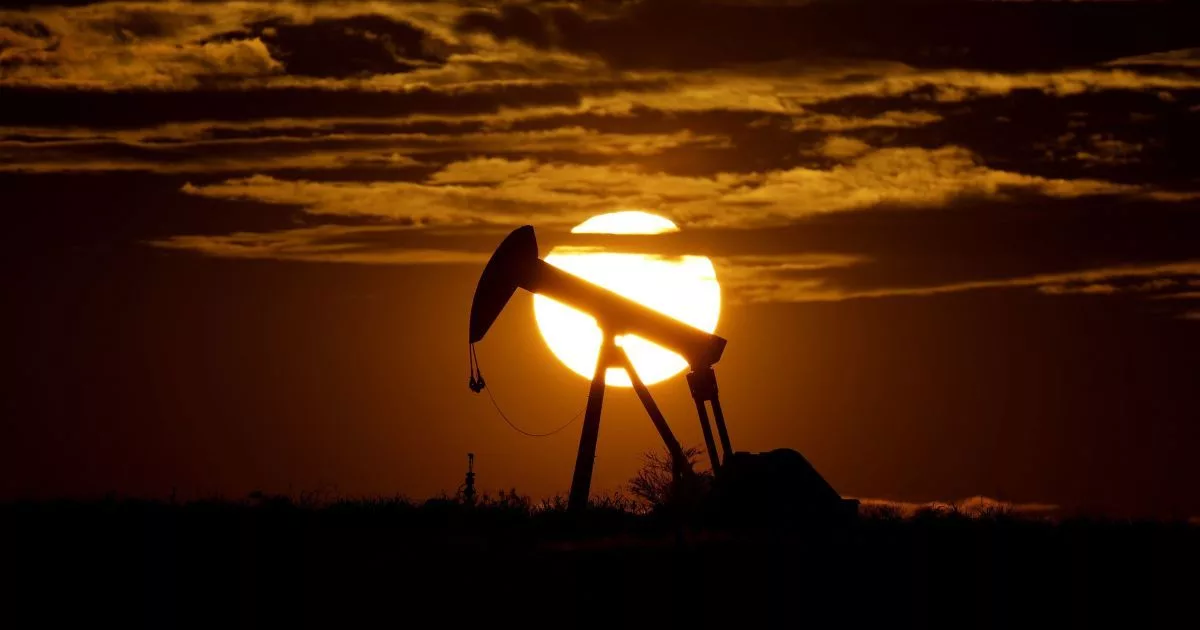
A wildcatter is a person or company that drills for oil or natural gas in territory where commercial production has not yet been established. Instead of developing a reservoir that is already known to contain hydrocarbons, a wildcatter accepts much greater geological uncertainty in pursuit of a new discovery. That makes wildcatting one of the clearest examples of the relationship between financial risk and potential reward in the energy industry.
The simple answer to what is a wildcatter therefore goes beyond “someone who drills for oil.” A wildcatter explores where the outcome is uncertain, committing capital before a commercially viable deposit has been demonstrated. Modern seismic imaging, geological modeling and drilling technology provide far more information than early oil prospectors had, but they cannot eliminate the fundamental uncertainty: until a well is drilled and evaluated, an attractive geological prospect is still only a prospect.
The term also has a broader financial meaning. “Wildcatter” can sometimes describe someone associated with highly speculative business ventures, but its core modern use remains closely connected with oil and gas exploration. Understanding that distinction matters because the word is often used casually to describe aggressive entrepreneurs or investors even when no drilling is involved.
What Is a Wildcatter in Simple Terms?
A wildcatter is an oil or gas explorer willing to drill an exploratory well in an area that has not yet been proven commercially productive. The well itself is generally called a wildcat well or exploratory well. The defining feature is not simply that drilling is taking place – it is that the drilling tests an unproven opportunity.
Consider two companies drilling wells. Company A is adding another well to a field where neighboring wells already produce oil and extensive reservoir data exist. Company B is drilling the first exploratory well into a geological structure where no commercial discovery has yet been established. Company B is taking the type of exploration risk traditionally associated with a wildcatter.
This distinction also explains why asking what is a wildcatter is partly a financial question. Exploration requires money before anyone knows whether the underground resource will justify development. A successful discovery can create a valuable asset, while an unsuccessful well can consume substantial capital without creating a producing property.
What Is a Wildcat Well?
A wildcat well is an exploratory oil or natural gas well drilled in unproven territory or outside an established producing field. In practical terms, it tests whether geological evidence suggesting hydrocarbons can be converted into an actual commercial discovery. A promising seismic image alone cannot prove that a reservoir will produce economically viable quantities of oil or gas.
That uncertainty separates a wildcat well from many development wells. Development drilling generally takes place after a discovery has already provided considerably more information about the reservoir. The company may still face technical, commodity-price and operational risks, but the fundamental question of whether hydrocarbons exist in the area has been reduced.
For a wildcatter, that question remains central. A target can have the geological characteristics associated with a hydrocarbon accumulation and still disappoint when drilled. This is why a dry hole is not merely a technical inconvenience – it can represent capital spent without creating the production and cash flow that justified taking the exploration risk.
How Does a Wildcatter Work?
A wildcatter works by identifying an unproven oil or gas prospect, obtaining the necessary rights and approvals, evaluating the geology, raising or allocating capital and eventually drilling an exploratory well. The process can involve geologists, geophysicists, engineers, land specialists, drilling contractors, lawyers, investors and regulators long before a drill bit reaches the target formation.
The popular image of a wildcatter making a lucky guess is therefore incomplete. Modern exploration is a technical and financial decision-making process in which uncertainty is analyzed rather than ignored. Geological and geophysical evidence can improve the quality of the decision, but better information does not turn an unproven reservoir into a guaranteed discovery.
A simplified wildcatting process looks like this:
- Identify a prospective area. Geological information suggests that the subsurface may contain a viable hydrocarbon accumulation.
- Study the geology. Specialists examine rock formations, structural characteristics, historical information and other relevant subsurface evidence.
- Acquire seismic data where appropriate. Seismic surveys can help map underground structures and identify potential traps.
- Secure exploration rights. The operator needs the appropriate leases, licenses, agreements or other rights required in the jurisdiction.
- Estimate the opportunity and risk. The potential resource, probability of success, drilling cost and possible economics are assessed.
- Secure financing. Exploration may be funded internally, through partners or through other financing structures.
- Plan and drill the exploratory well. The well physically tests the geological interpretation.
- Evaluate the results. Data from the well help determine whether hydrocarbons are present and whether further appraisal is justified.
- Appraise a discovery. Finding hydrocarbons does not automatically mean finding a commercially attractive field.
- Develop, sell or abandon the prospect. The next decision depends on the geological results, economics, infrastructure, regulation and company strategy.
The crucial point is that drilling is only one part of what a wildcatter does. A large amount of technical analysis, capital allocation and risk assessment occurs before drilling begins, while additional appraisal may be necessary even after an apparent discovery.
Why Is Wildcatting So Risky?
Wildcatting is risky because substantial capital can be committed before the commercial value of the underground resource is known. Geological uncertainty is the most obvious risk, but it is not the only one. Even a genuine hydrocarbon discovery can disappoint financially if development costs are excessive, production characteristics are poor or market conditions deteriorate.
That distinction is essential when understanding what is a wildcatter from an investment perspective. “Oil was found” and “the project will generate an attractive return” are not equivalent statements. A discovery must ultimately be technically recoverable, commercially viable and capable of reaching the market under workable economic and regulatory conditions.
Several major risks can affect a wildcatter:
- Geological risk. The target may not contain the expected hydrocarbons, reservoir quality or volumes.
- Drilling risk. Technical problems can delay a well, increase costs or prevent the planned target from being evaluated properly.
- Capital risk. Exploration consumes money before it produces revenue, and an unsuccessful well may provide no direct financial return.
- Commodity-price risk. Oil and natural gas prices can change the economics of a discovery.
- Development risk. A discovery may require expensive infrastructure, additional wells or complex engineering before production begins.
- Regulatory risk. Permits, environmental requirements, taxation and operating rules vary by jurisdiction and can change.
- Political risk. Exploration in some regions can be affected by instability, sanctions, contract disputes or changes in government policy.
- Financing risk. A smaller explorer may need additional capital before a project reaches production.
- Concentration risk. A company dependent on one or two exploration prospects can be heavily affected by a single drilling result.
These risks can interact. A technically successful well can still become financially unattractive after cost overruns or a major decline in commodity prices. Conversely, stronger oil prices cannot transform a genuinely dry well into a producing asset.
Wildcatter vs Oil Producer – What Is the Difference?
A wildcatter focuses on discovering hydrocarbons in unproven areas, while an oil producer may concentrate primarily on extracting oil or gas from already discovered resources. A company can perform both roles, so these labels describe activities and strategies rather than mutually exclusive categories of business.
This difference matters because exploration and production can have very different risk profiles. Drilling additional wells in a well-understood producing field generally provides more subsurface information than testing an entirely new prospect. A wildcatter deliberately operates further toward the exploration end of that spectrum.
| Factor | Wildcatter | Established producer |
|---|---|---|
| Primary objective | Discover new oil or gas resources | Produce from known resources |
| Typical drilling | Exploratory or wildcat wells | Development and production wells |
| Geological uncertainty | High | Generally lower in developed fields |
| Immediate production cash flow | Often none from the exploration target | Usually central to the business |
| Dependence on discoveries | Potentially very high | Varies by company |
| Capital outcome | Can be highly asymmetric | Often more predictable, but never risk-free |
| Main investor concern | Discovery probability and funding | Production, costs, reserves, prices and capital allocation |
The comparison should not imply that established producers are safe investments or that wildcatters are automatically superior opportunities. Both remain exposed to energy prices, operating problems, regulation and capital-allocation decisions. The important difference is where the uncertainty sits in the business model.
Wildcatter vs Independent Oil Company
A wildcatter and an independent oil company are not automatically the same thing. “Independent” generally describes an oil and gas business that is not part of a fully integrated major spanning large portions of the energy value chain, while “wildcatter” describes an exploration-oriented role involving unproven prospects.
An independent producer may spend most of its capital developing existing assets and conduct relatively little frontier exploration. Conversely, a company pursuing high-risk exploratory wells can display a wildcatter strategy regardless of whether outsiders casually classify it as an independent producer.
This distinction is useful for investors because labels can hide what actually drives financial results. Instead of assuming that every small oil company is a wildcatter, examine where its capital is being spent, how much production it already has, how dependent it is on exploration success and whether existing cash flow can finance future drilling.
Why Would Anyone Become a Wildcatter?
The attraction of wildcatting is asymmetric potential: the maximum loss on a particular exploration program may be substantial, but a genuinely important discovery can create an asset worth far more than the cost of the initial well. That possibility has historically attracted entrepreneurs and companies willing to tolerate unusually high uncertainty.
A successful first well, however, is rarely the end of the financial story. The discovery may need appraisal wells to establish its size and characteristics. Roads, pipelines, processing facilities, storage, water systems or export infrastructure may also be required depending on the location and project.
The real economic question is therefore not simply whether the wildcatter finds oil. It is whether the discovery can ultimately generate enough economically recoverable production to justify exploration, appraisal, development, operating and financing costs.
What Happens When a Wildcatter Finds Oil?
Finding oil begins another phase of evaluation rather than guaranteeing an immediate fortune. The operator must determine what was actually discovered, whether it can flow at commercially useful rates, how large the accumulation might be and how much additional capital would be required to develop it.
A discovery can lead to further appraisal drilling and technical analysis. If the project appears commercially attractive, the company can prepare a development plan, raise additional financing, bring in partners, sell part or all of its interest, or move toward production. Each route changes the balance between future upside and the amount of capital still at risk.
A discovery therefore has both geological and economic dimensions. Hydrocarbons can exist underground without constituting an economically attractive project. Investors evaluating exploration announcements need to distinguish between evidence of hydrocarbons, a commercial discovery, estimated recoverable resources and actual producing reserves.
What Happens When a Wildcatter Drills a Dry Hole?
A dry hole means the well failed to establish commercially useful hydrocarbons at the target, although the precise technical result can be more complicated than the phrase suggests. Financially, the most important consequence is that money has been spent without creating the producing asset that the exploration program sought.
The loss can include more than the physical drilling bill. Geological studies, seismic work, leases, mobilization, services, personnel and other exploration costs may all contribute to the economic exposure. For a large diversified energy company, one unsuccessful exploratory well may be manageable; for a small company concentrated on a single prospect, the same result can be much more consequential.
A dry hole can still generate geological information that changes the interpretation of an area. But information does not automatically recover the capital spent. This is one reason investors should examine a company’s financial capacity to survive unsuccessful exploration rather than focusing exclusively on the potential value of a successful discovery.
How Do Wildcatters Make Money?
Wildcatters can make money when successful exploration creates an economically valuable oil or gas asset. The eventual value may be realized through production, selling the discovery or acreage, bringing in a larger partner, or another transaction involving the exploration interest.
The business model is therefore fundamentally different from earning predictable interest on a deposit or receiving established rental income. Capital is placed at risk in an uncertain exploration project with the expectation that occasional valuable discoveries can justify the failures and costs associated with exploration.
This is also why investors should not confuse the potential size of a discovery with guaranteed shareholder profit. Financing arrangements, ownership percentages, debt, future development spending, taxes, dilution and operating costs all affect how much of a successful project ultimately translates into value for shareholders.
Are Wildcatters Still Around in 2026?
Yes. The technology has changed dramatically, but exploration for previously unproven oil and gas resources still exists in 2026. Modern wildcatters can use advanced seismic imaging, computer modeling, directional drilling and extensive geological datasets that early prospectors could not have imagined.
Technology changes the quality and quantity of information available before drilling, but it does not remove subsurface uncertainty. A model is an interpretation of geology, not physical proof of commercial production. The drill bit ultimately provides information that remote analysis cannot completely replace.
The modern meaning of what is a wildcatter should therefore not be reduced to the romantic image of an individual entrepreneur gambling everything on a single hole. Wildcatting can be conducted by sophisticated exploration companies and technical teams using modern data while still retaining the defining characteristic of testing an unproven prospect.
Can You Invest in a Wildcatter?
Yes, investors can gain exposure to exploration-focused oil and gas companies when those businesses are publicly traded, although buying their shares is not the same as personally financing or operating a wildcat well. The investor owns an interest in a company whose value may be affected by exploration results, existing production, financing, commodity prices and other assets.
Before considering such exposure, it is important to understand basic equity ownership. The WeaveMoney guide to how to invest in stocks explains how stock investing works and why share prices can fall as well as rise.
A wildcatter-style exploration stock can behave very differently from a mature diversified company. A significant discovery may materially change expectations for a small explorer, while an unsuccessful well, financing problem or project delay can have the opposite effect. The possibility of a large gain is not evidence that the probability of achieving it is high.
What Should Investors Check Before Investing in a Wildcatter?
Investors should begin with the company rather than the excitement surrounding a prospective oil discovery. A dramatic resource estimate or promising geological description means little without understanding the company’s ownership, finances, drilling obligations and ability to fund the project.
The following questions provide a more disciplined framework:
- Does the company already produce oil or gas? Existing production can provide cash flow that an exploration-only company lacks.
- How much cash does it have? Compare available liquidity with planned exploration and development spending.
- How much debt does it carry? Debt can magnify financial pressure if drilling disappoints.
- What percentage of the project does it own? A headline discovery size is not necessarily attributable entirely to one company.
- Who pays for the next well? Partnership and farm-out structures can materially change capital exposure.
- How dependent is the company on one prospect? Greater concentration can make one drilling result disproportionately important.
- What happens after a discovery? Appraisal and development may require much more money than the initial exploration well.
- What happens after failure? Determine whether the company has enough capital and other assets to continue operating.
- Could shareholders be diluted? Additional equity financing can increase the number of shares outstanding.
- What assumptions make the project economic? Commodity prices, production rates, infrastructure and development costs all matter.
This process changes the question from “Could this well be huge?” to “What does success or failure mean for the entire company and for each share?” That is a much more useful way to evaluate speculative exploration exposure.
Wildcatter Investing vs Diversified Investing
Wildcatter investing can create concentrated exposure to exploration outcomes, whereas diversified investing spreads capital across multiple holdings, companies or asset classes. The difference is particularly important for beginners because a single exploration result can materially affect a small energy company.
Diversification does not guarantee profits or prevent losses. It does, however, reduce dependence on one specific company, geological prospect or event. That can matter when the underlying activity has a binary element: the drill either provides encouraging evidence or it does not, even though the eventual commercial outcome can involve many additional stages.
Anyone comparing speculative exploration with other assets can also look at how to invest in real estate to see how another capital-intensive asset class creates a very different combination of liquidity, operating requirements and risk.
| Factor | Exploration-focused wildcatter exposure | Diversified portfolio |
|---|---|---|
| Concentration | Can be very high | Spread across multiple holdings |
| Single-event sensitivity | Potentially extreme | Usually lower |
| Geological risk | Directly relevant | Usually limited or diversified |
| Commodity exposure | Often substantial | Depends on allocation |
| Research required | Specialized | Varies by strategy |
| Potential volatility | Can be very high | Depends on portfolio |
| Loss risk | Significant | Still present, but less dependent on one prospect |
Neither column automatically represents the “better” investment for every person. The appropriate level of speculative exposure depends on financial goals, risk tolerance, time horizon, knowledge and the ability to absorb losses.
Is a Wildcatter the Same as a Speculator?
Not exactly. A wildcatter takes a speculative risk because an exploration target is unproven, but the decision can still be based on extensive geological analysis, seismic interpretation, engineering and economic modeling. Speculation does not necessarily mean random guessing.
The distinction becomes clearer when considering the underlying activity. A wildcatter is attempting to discover a physical resource whose existence and commercial value can eventually be tested. A financial speculator may instead take a position based primarily on expected changes in an asset’s market price.
The two concepts overlap through risk-taking, uncertainty and potentially asymmetric outcomes. But calling every speculative investor a wildcatter strips the term of the specific oil-and-gas meaning that makes it useful.
Common Mistakes When Thinking About Wildcatters
The biggest mistake is treating wildcatting as a simple lottery in which one successful well automatically creates enormous wealth. Modern exploration is far more technical, while the financial journey from geological prospect to profitable production can be long and capital intensive.
Several other misconceptions can distort the picture:
- Assuming finding oil means making money. A discovery still needs to be commercially viable.
- Ignoring development costs. The first exploration well can be only a small part of total project spending.
- Confusing resources with reserves. Different petroleum estimates carry different levels of technical and commercial certainty.
- Ignoring ownership percentages. A company may own only part of the project generating the headline numbers.
- Forgetting financing risk. Future drilling may require debt, equity issuance or new partners.
- Treating technology as certainty. Better seismic and modeling tools reduce uncertainty but cannot eliminate it.
- Ignoring commodity prices. A project attractive at one oil or gas price can look very different at another.
- Putting too much capital into one exploration story. Concentration can turn one disappointing result into a major portfolio loss.
The common thread is simple: potential upside should never be analyzed without the probability, cost and consequences of failure. That principle applies well beyond the energy industry.
What Is a Wildcatter Really Betting On?
A wildcatter is ultimately betting that an unproven geological idea can become a commercially valuable producing asset. Success requires more than being correct about the presence of hydrocarbons. The discovery must also work technically, economically and operationally.
That makes wildcatting a useful real-world illustration of risk and reward. A project with enormous theoretical upside may deserve a lower valuation when the probability of success is low, future costs are large or financing is uncertain. Conversely, reducing geological uncertainty through successful drilling can substantially change how an asset is valued.
For investors, the lesson is not that wildcatters should automatically be avoided or pursued. It is that high potential returns usually exist for a reason, and understanding that reason is more important than being attracted by the size of the possible payoff.
FAQ About What Is a Wildcatter
A wildcatter is a person or company that explores for oil or natural gas in an area where commercial production has not yet been established. The activity involves drilling exploratory or wildcat wells and carries substantial geological and financial uncertainty.
In the oil industry, a wildcatter is an explorer that drills in unproven territory in search of a new petroleum discovery. Modern wildcatters may use sophisticated geological analysis and seismic technology before committing capital to a well.
In finance and business language, wildcatter can also describe someone associated with highly speculative ventures. The primary historical and industry meaning, however, is connected with oil and gas exploration in unproven areas.
A wildcatter identifies prospective oil or gas targets, evaluates geological information, obtains exploration rights, secures financing and drills exploratory wells. If a discovery is made, further appraisal is normally required before commercial development can proceed.
Wildcat drilling is exploratory drilling in an area or geological target that has not yet been proven commercially productive. Its purpose is to test whether a geological prospect actually contains potentially recoverable oil or natural gas.
The term has been associated with speculative drilling in unproven territory since the early development of the petroleum industry. Today, “wildcat well” remains an industry term for an exploratory well outside established production or in an unproven area.
A wildcatter can be an individual entrepreneur or a company involved in high-risk exploration. Not every oil company is a wildcatter because many businesses focus primarily on developing and producing already discovered resources.
Yes. Wildcat exploration continues in the modern oil and gas industry, although sophisticated seismic imaging, geological modeling and drilling technology have changed how prospects are identified and evaluated.
A wildcatter can create value by making a commercially viable discovery and then developing the resource, producing it, selling an interest or bringing in partners. An unsuccessful exploration program can instead result in substantial capital losses.
Wildcat drilling can be highly risky because the target has not yet been proven commercially productive. Geological failure, drilling problems, development costs, financing, regulation and commodity prices can all affect the eventual financial outcome.
An investor can obtain indirect exposure by owning shares or interests in exploration-focused companies, but that is different from operating a wildcat well. Such investments can be highly speculative and should be evaluated in the context of the investor’s overall portfolio and ability to absorb losses.
A wildcatter emphasizes exploration in unproven areas, while a producer primarily extracts hydrocarbons from discovered resources. Some companies do both, so the distinction describes the nature of their activities rather than an absolute company classification.
The discovery is evaluated to determine its size, reservoir characteristics, recoverability and commercial potential. Additional appraisal drilling and significant development spending may be necessary before production can begin.
The exploratory well may become a dry hole, meaning the capital spent on drilling and related exploration does not produce the intended commercial asset. The company may use the geological information gained to reassess the area, but the financial loss can still be significant.
No. Wildcatting involves uncertainty and substantial financial risk, but modern exploration decisions can rely on geology, seismic data, engineering and economic analysis. Those tools improve decision-making without guaranteeing that drilling will succeed.
