 en
en



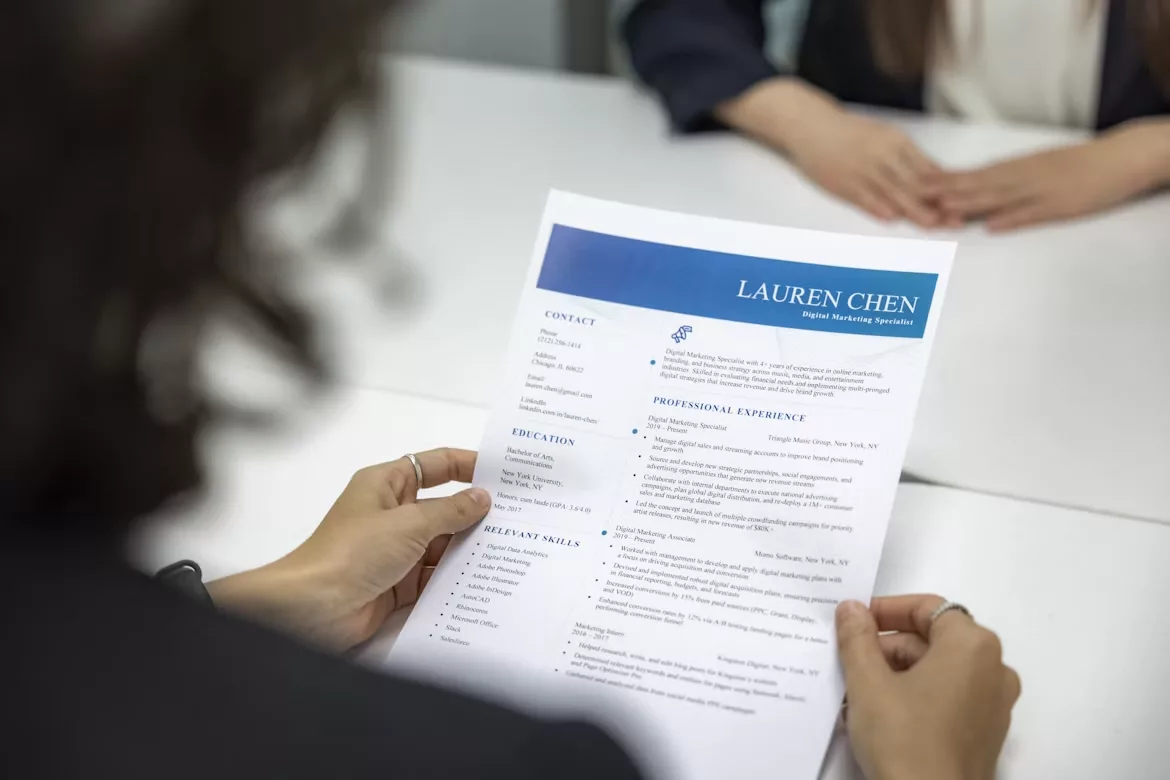
Learning how to prepare for a job interview in 2026 is less about memorizing perfect answers and more about building a clear case for why your experience fits the role. Employers can already see the résumé that earned the interview. The conversation is where they test whether the experience is relevant, whether examples support the claims on that résumé and whether the candidate can communicate clearly when questions become less predictable.
Good job interview preparation therefore starts with the job description, not a list of 100 generic interview questions. The strongest candidates can connect the employer’s requirements to specific examples of problems they solved, decisions they made, results they produced and lessons they learned. They also understand enough about the organization to explain why this particular position makes sense rather than giving the same answer to every employer.
There is another reason to prepare carefully in 2026. Interviews can happen in person, over video, by phone, through multiple rounds or in structured panels, and some hiring processes now incorporate assessments or technology-assisted screening. The goal is not to predict every question – it is to prepare enough evidence, context and questions that an unexpected question does not destroy the interview.
This guide explains how to prepare for a job interview from the moment the invitation arrives through the follow-up afterward. It also covers salary preparation, interviews without experience, STAR answers, difficult questions, remote interviews, red flags and what to do when only 30 minutes remain.
How to Prepare for a Job Interview in 10 Steps
The best way to prepare for a job interview is to understand the role, research the employer, map the requirements to your experience, prepare several strong examples, practice answers aloud, research compensation, prepare questions, test interview logistics and review everything shortly before the meeting. Each step reduces a different type of interview risk. Skipping company research, for example, cannot be fixed by choosing a better outfit.
Use this sequence:
- Read the job description again.
- Research the company and role.
- Match your experience to the main requirements.
- Build a bank of STAR examples.
- Prepare answers to likely interview questions.
- Research salary and total compensation.
- Prepare questions for the interviewer.
- Practice aloud instead of memorizing scripts.
- Prepare the technology, location and clothing.
- Complete a final interview-day review.
This process works whether the interview is tomorrow or next week. More time allows deeper preparation, but the priorities remain largely the same.
| Preparation step | What to prepare | Desired result |
|---|---|---|
| Job description | Skills, duties, requirements | Know what the employer is hiring for |
| Company research | Products, business, recent developments | Understand the employer |
| Experience match | 5–7 relevant examples | Evidence for your claims |
| STAR stories | Situation, Task, Action, Result | Clear behavioral answers |
| Common questions | Talking points | Less hesitation |
| Salary | Market range and target | Avoid negotiating blindly |
| Your questions | 5–8 useful questions | Evaluate the employer |
| Practice | Mock interview aloud | More natural delivery |
| Logistics | Device, route, clothing, documents | Prevent avoidable problems |
| Final review | Key facts and examples | Enter prepared, not overloaded |
A good interview preparation plan is therefore not simply “practice answers.” It creates a compact set of information that can be adapted to many different questions.
Step 1: Read the Job Description Like an Interviewer
The first step in how to prepare for a job interview is to read the job description again, even if it was reviewed carefully before applying. The employer has effectively given candidates a partial map of the interview. Responsibilities, required skills, preferred qualifications and repeated phrases indicate which capabilities are likely to matter most.
Separate the description into three groups: essential requirements, preferred requirements and responsibilities. Then identify which claims can be supported with concrete evidence. If the role asks for project management, do not stop at “experienced in project management.” Prepare an example showing what was managed, how many stakeholders were involved, what problem appeared and what happened as a result.
Pay attention to repeated ideas. If communication, cross-functional collaboration or revenue growth appears several times, expect those themes to surface during the interview. Every major requirement should have at least one piece of evidence attached to it before the interview begins.
Turn the Job Description Into an Interview Preparation Sheet
A simple preparation sheet can make job interview preparation far more focused. Put the employer’s requirement in one column and your strongest evidence in another. A third column can contain the likely question that might be used to test it.
| Employer requirement | Evidence to prepare | Possible interview question |
|---|---|---|
| Leadership | Led a five-person project team | Tell me about a time you led a team |
| Sales | Increased quarterly sales by 18% | What is your biggest sales achievement? |
| Problem-solving | Fixed a process delaying orders | Tell me about a difficult problem |
| Communication | Presented results to senior leadership | How do you explain complex information? |
| Time management | Delivered three overlapping projects | How do you prioritize competing deadlines? |
The exercise takes only a few minutes but creates a much stronger foundation than randomly rehearsing generic questions. It also reveals weaknesses before the interviewer finds them.
Step 2: Research the Company Before a Job Interview
Anyone learning how to prepare for a job interview should be able to explain what the company does, what it sells or provides, who its customers are and why the specific role is interesting. The objective is not to memorize the About page. It is to understand enough of the business to connect personal skills with the employer’s actual needs.
Start with the employer’s official website. Review the About page, products or services, careers information, leadership where relevant and recent company announcements. For a public company or senior role, investor materials and recent financial reporting may also provide useful context.
Then look at the specific team or function if information is available. A marketing candidate should understand the company’s audience and positioning, while a software candidate may need to know the product and technical environment. A finance candidate may need a stronger grasp of the business model and financial priorities.
Write down three things before the interview: what the company does, why this role exists and why your background could be useful. If “Why do you want to work here?” could be answered with the name of any competitor substituted into the sentence, the answer is not specific enough.
Step 3: Prepare a 60-Second Introduction
A concise professional introduction is one of the most useful tools when preparing for a job interview because some version of “Tell me about yourself” appears frequently. The answer should not retell an entire life story or recite every line of a résumé. It should quickly establish current professional identity, relevant experience and why the next move makes sense.
A useful structure is present → relevant past → future. Start with what you do now or the professional area you are entering. Then mention two or three experiences or strengths most relevant to the vacancy. Finish by connecting those experiences to the opportunity being discussed.
For example, a candidate might explain that they currently manage paid acquisition for an ecommerce company, previously worked across search and social campaigns, and are now looking for a role with broader ownership of growth strategy. That answer gives the interviewer a clear narrative without sounding like a memorized autobiography.
Practice until the introduction feels natural, but do not memorize every word. The objective is consistency of message, not identical wording every time.
Step 4: Build 6 STAR Stories Before the Job Interview
One of the most effective ways to prepare for a job interview is to create a small bank of flexible stories using the STAR structure: Situation, Task, Action and Result. Behavioral questions often ask candidates to describe a real situation rather than speculate about what they might do. A prepared story bank makes those questions easier to answer without inventing examples under pressure.
Six strong examples can cover a surprising number of questions. Prepare stories about a major achievement, difficult problem, mistake or failure, conflict, leadership or initiative, and a situation involving pressure or competing priorities. Each story should be real and specific enough to survive follow-up questions.
The most important part is usually Action. Interviewers need to understand what you actually did rather than what the team collectively accomplished. Result also matters, and numbers can strengthen an answer when they are truthful and meaningful.
How to Prepare for a Job Interview With the STAR Method
The STAR method gives an interview answer a beginning, middle and end. Situation provides context, Task explains the responsibility or problem, Action describes what the candidate did and Result explains what changed. The structure is particularly useful for questions beginning with “Tell me about a time…”
| STAR element | What to include | Keep it focused on |
|---|---|---|
| Situation | Brief context | What was happening |
| Task | Your responsibility | What needed to be achieved |
| Action | Specific steps you took | Your decisions and behavior |
| Result | Outcome and lesson | What changed |
Do not spend three minutes explaining the Situation and 20 seconds describing the Action. The interviewer usually cares more about how the problem was handled than the background details.
Step 5: Prepare for the Most Common Job Interview Questions
Preparing for common questions reduces unnecessary hesitation, but memorizing polished scripts can make an interview sound unnatural. Prepare key points instead. That allows answers to remain conversational while preserving the evidence that matters.
Questions worth preparing include:
- Tell me about yourself.
- Why do you want this job?
- Why do you want to work for this company?
- What are your strongest skills?
- What is a weakness you are working on?
- Tell me about a difficult problem you solved.
- Tell me about a mistake or failure.
- Describe a conflict at work and how you handled it.
- Why are you leaving your current job?
- What achievement are you most proud of?
- How do you prioritize competing deadlines?
- Where do you want your career to go next?
- What are your salary expectations?
- Why should we hire you?
- What questions do you have for us?
The exact wording may change, but the themes are predictable. Preparing evidence for these areas also helps with less familiar questions.
How to Answer “Tell Me About Yourself”
A strong “Tell me about yourself” answer should focus on the professional story most relevant to the vacancy. It is not an invitation to describe childhood, every previous job or unrelated personal details. Aim for a concise narrative that makes the interviewer understand why the current application is a logical next step.
Start with the present. Explain the current role, field or strongest professional identity. Add one or two past experiences that demonstrate relevant capabilities, then connect those experiences to what makes the new role attractive.
Keep the answer flexible. A senior candidate may need more context than a graduate, while a career changer needs to explain the transition more explicitly. The common objective is relevance.
How to Answer “Why Do You Want to Work Here?”
To answer this question well, combine something specific about the employer with something specific about the role and something specific about your experience. Generic praise such as “great company culture” or “exciting opportunity” provides little evidence that the company was researched. A stronger answer identifies a concrete connection.
For example, a candidate could mention a product area the company is expanding, explain why that work is professionally interesting and connect it to previous experience. The answer then becomes about fit rather than flattery.
Avoid pretending to have dreamed about working for the company for years when that is not true. A credible, specific reason is stronger than exaggerated enthusiasm.
How to Answer “What Is Your Greatest Weakness?”
A useful weakness answer identifies a genuine professional limitation that is not fatal to the role and explains what is being done about it. Avoid disguised strengths such as “I work too hard” or “I care too much.” Interviewers have heard those answers many times.
Choose something manageable and demonstrate self-awareness. A candidate might explain that earlier presentations included too much detail, then describe how they learned to structure executive updates around decisions and outcomes. The improvement matters as much as the weakness.
Do not choose a weakness that directly contradicts a core requirement. Someone applying for a bookkeeping role should think carefully before saying attention to detail is the main weakness.
How to Answer “Why Are You Leaving Your Current Job?”
Keep the answer forward-looking and professional. Useful reasons can include seeking greater responsibility, different work, stronger development opportunities, a change in industry, relocation or a role better aligned with existing skills. The answer does not need to conceal genuine problems, but it should avoid turning the interview into an extended complaint about a former employer.
This becomes especially important when leaving a difficult environment. WeaveMoney’s guide to the signs of a toxic workplace explains how to evaluate repeated workplace problems and also covers how to discuss a job search without making criticism of the current employer the center of the next interview.
A neutral explanation can still be truthful. The objective is to show what the candidate is moving toward, not spend valuable interview time proving how bad the previous workplace was.
Step 6: Know Your Résumé Better Than the Interviewer Does
Knowing how to prepare for a job interview includes being ready to discuss anything submitted during the application process. Read the résumé from top to bottom before the interview. Dates, achievements, job changes, employment gaps and major claims can all generate follow-up questions.
For each previous role, prepare a brief explanation of responsibilities, strongest achievement, reason for leaving and relevance to the current opportunity. If the résumé contains metrics, know how those numbers were calculated. An interviewer may reasonably ask what “increased revenue by 25%” actually means.
Never invent an explanation for something on the résumé. If a number was estimated, be transparent about the basis. If a skill is basic rather than advanced, describe the proficiency accurately.
Anything on a résumé should be defensible in conversation. That includes tools, languages, certifications, achievements and job titles.
Step 7: Prepare for a Job Interview When You Have No Experience
Learning how to prepare for a job interview without experience requires changing what counts as evidence, not pretending experience exists. Entry-level candidates can use education, internships, volunteering, student organizations, freelance projects, personal projects and transferable skills from unrelated jobs. Employers hiring genuinely junior candidates know that the résumé will not look like that of someone with ten years of experience.
Start by identifying what the role actually requires. Communication can be demonstrated through presentations or customer-facing work. Leadership can come from organizing a university project. Problem-solving can be shown through coursework, volunteering or a personal project.
A candidate without formal experience should also be prepared to explain how new skills are learned. Specific evidence is stronger than “I am a fast learner.” Describe a skill that had to be learned, how it was learned and what was produced with it.
Do not apologize throughout the interview for being inexperienced. The goal is to show potential with evidence, not to compete with an imaginary senior candidate for an entry-level job.
Step 8: Prepare for Salary Questions Before the Job Interview
Salary preparation should happen before the interviewer asks for expectations. Research typical compensation for the role, seniority, industry and location, then consider your own experience and the complete compensation package. Going into the interview with no range makes it easier to anchor on the first number mentioned.
Salary is only one part of compensation. Depending on the role and country, the package can include bonuses, commissions, health coverage, retirement contributions, equity, paid leave, remote-work benefits, professional-development budgets and other benefits. A slightly lower salary can sometimes produce stronger total compensation, while a higher salary can come with weaker benefits or substantially higher commuting costs.
Decide three numbers in advance: an ideal outcome, a reasonable target and a minimum that would make the move worthwhile. The minimum is primarily for personal decision-making rather than something that must immediately be disclosed. These numbers should be grounded in market information and personal circumstances rather than chosen randomly.
A job change can also be part of broader financial short-term goals, especially when the objective is to increase income, fund professional training or create greater financial stability.
The important point is to separate excitement about getting an offer from the financial decision of whether that offer actually improves the situation.
How to Answer Salary Expectations in a Job Interview
When asked about salary expectations, first determine whether the employer has already disclosed a range. If a range is available, explain where your expectations sit within it based on experience and responsibilities. If no range has been provided, it can be reasonable to ask what compensation range has been budgeted for the position.
If a number is necessary, use researched market information rather than an arbitrary figure. A range can provide flexibility, but do not give a bottom number that would actually be unacceptable. Employers may reasonably treat the bottom of the stated range as a number the candidate is willing to consider.
Also clarify whether the conversation concerns base salary or total compensation. A $90,000 base salary with a substantial bonus and strong benefits is different from $90,000 total target compensation.
Step 9: Prepare Questions to Ask the Interviewer
Candidates should prepare questions because the interview is also an opportunity to evaluate the employer. Asking only about vacation or how quickly a promotion is possible can create an incomplete impression, but asking nothing at all wastes a valuable source of information. Strong questions reveal how the job actually works.
Prepare more questions than will probably be needed because some may be answered naturally during the conversation. Useful options include:
- What would success look like in the first 90 days?
- What are the biggest challenges the person in this role will inherit?
- How is performance measured?
- Why is the position open?
- How does this team work with other departments?
- What distinguishes people who perform particularly well here?
- What does the manager’s feedback process look like?
- What are the team’s priorities over the next six to twelve months?
- What has changed about the role recently?
- What are the next steps in the interview process?
Choose questions that have not already been answered. A good interview should feel increasingly specific as both sides learn more.
Step 10: Practice the Job Interview Out Loud
Silent preparation is not enough. An answer that sounds clear in the head can become long, repetitive or confusing when spoken. Practice aloud to discover where explanations become difficult.
A mock interview with another person is useful because it introduces unpredictability. Ask the other person to change the order of questions and use follow-ups rather than reading a script. If nobody is available, record answers on a phone or computer and review them.
Listen for unnecessary filler, answers that run too long, weak examples and moments where the point becomes unclear. Do not attempt to remove every pause or make the delivery sound like a speech. Natural conversation includes brief pauses.
Practice the structure of the answer, not every sentence. Over-rehearsed responses can become difficult to adapt when an interviewer asks the same question in an unexpected way.
How to Use AI to Prepare for a Job Interview in 2026
AI can be useful for job interview preparation when it is used as a practice partner rather than a source of fabricated experience. A candidate can provide a job description and ask an AI tool to identify likely competency areas, generate practice questions or simulate follow-up questions. It can also help reveal whether an answer is too vague or fails to explain the result.
The quality of the exercise depends on the information supplied. A generic prompt will produce generic interview questions. A better practice session includes the role, seniority, job description and truthful background information while excluding confidential employer information or personal data that should not be shared.
Never use AI to invent achievements, employers, certifications or project results. Interviewers can ask detailed follow-up questions, and fabricated stories become increasingly difficult to sustain. Use technology to organize and challenge genuine experience.
A useful AI practice prompt is conceptually simple: ask for one question at a time, answer it aloud, then request follow-up questions based on weaknesses or ambiguities in the answer. That creates a more realistic exercise than reading a static list of questions.
How to Prepare for a Video Job Interview
Preparing for a video job interview requires all the same content preparation as an in-person meeting plus a technology check. Test the camera, microphone, internet connection, meeting link and software before the scheduled time. Waiting until two minutes before the interview to discover that an application requires an update creates avoidable stress.
Place the camera close to eye level and choose a quiet location with adequate light. Remove distracting notifications and close unnecessary applications. Keep the résumé, job description and a few short notes nearby, but do not arrange a full script beside the screen and read from it.
Join a few minutes early where the platform allows it. If a technical problem occurs, communicate clearly and use the backup contact method provided by the recruiter. Technical perfection is less important than showing that reasonable preparation was completed.
Can You Use Notes During a Video Job Interview?
Yes, brief notes can be useful during a video interview, but they should support the conversation rather than replace it. Keep a small list of key achievements, questions and important numbers nearby. Avoid reading complete prepared answers because eye movement and unnatural delivery can make this obvious.
A useful note sheet might contain six STAR story labels, three company facts, salary research and five questions for the interviewer. That is enough to trigger memory without turning the interview into a reading exercise.
The same principle applies to in-person interviews. Notes can support preparation, but the candidate should still be able to discuss their own experience without relying heavily on them.
How to Prepare for an In-Person Job Interview
For an in-person interview, plan the journey before the day of the meeting. Confirm the address, travel time, parking or public transportation and building-entry procedure. Add a reasonable buffer for delays without arriving so early that the employer has to accommodate you long before the scheduled time.
Bring any documents the employer requested. A few copies of the résumé can also be useful, particularly for panel interviews, although many organizations work entirely digitally. Keep contact details available in case a travel problem makes a delay unavoidable.
Clothing should fit the employer, role and local professional norms. If uncertain, ask the recruiter about the expected dress code rather than trying to decode company culture from photographs alone.
How to Prepare for a Phone Interview
A phone interview removes visual cues, making vocal clarity and listening especially important. Choose a quiet location with reliable reception and keep the job description and résumé available. Because the interviewer cannot see body language, short verbal acknowledgments can help signal engagement without interrupting.
Do not treat a phone screen as an informal conversation that requires no preparation. Recruiters may use it to verify experience, motivation, availability, salary expectations and basic fit before deciding whether to advance the application. A weak phone interview can end the process before a hiring manager is involved.
Stand or sit in a position that makes speaking comfortably possible. Smiling naturally while talking can also change vocal energy, even though the interviewer cannot see it.
How to Prepare for a Panel Interview
A panel interview means several people may evaluate the candidate simultaneously, often from different functional perspectives. Ask for interviewer names and roles in advance when that information is available. Understanding who is in the room helps explain why one person focuses on technical details while another asks about collaboration or leadership.
When answering, begin with the person who asked the question but include the rest of the panel through natural eye contact. Do not direct every answer exclusively to the most senior person. Each panel member may contribute to the hiring decision.
Prepare for repeated themes from different angles. One interviewer may ask about conflict, another about stakeholder management and a third about communication, all testing related capabilities.
How to Prepare for a Second Job Interview
A second interview usually requires deeper preparation rather than repeating the first interview. Review what was discussed previously, note unanswered questions and identify which areas the employer may want to explore further. Later rounds can involve senior leaders, future colleagues, case exercises or more detailed technical and behavioral questions.
Do not assume the new interviewer has been fully briefed on everything said in round one. Some answers may need to be repeated, but they can be adapted to the new person’s role. Keep the central professional story consistent.
This is also a good stage for more specific questions about expectations, management, team dynamics and business priorities. As the possibility of an offer becomes more realistic, the candidate should be gathering enough information to make a decision too.
How to Prepare for a Job Interview in 30 Minutes
If only 30 minutes remain, do not attempt to learn everything about the company. Prioritize the information most likely to affect the conversation. A focused half hour can still make a meaningful difference.
Use the time this way:
- Minutes 1–5: Read the job description and identify the five most important requirements.
- Minutes 6–10: Review the company website, product or service and role.
- Minutes 11–15: Choose three strong examples matching the job requirements.
- Minutes 16–20: Practice “Tell me about yourself” and “Why this role?” aloud.
- Minutes 21–24: Prepare three questions for the interviewer.
- Minutes 25–27: Review salary information if compensation may arise.
- Minutes 28–30: Check the meeting link, device, documents or travel details.
Do not spend the final 30 minutes memorizing dozens of generic answers. The highest-value preparation is understanding the role and having evidence that demonstrates fit.
How to Prepare for a Job Interview the Night Before
The night before an interview should be used for consolidation rather than cramming. Review the job description, company notes, STAR stories and questions, then prepare practical details. Constantly adding new material late into the evening can create more confusion than confidence.
For an in-person meeting, prepare clothing, documents, transportation and contact details. For a video interview, test the technology and prepare the room. Set alarms and make sure the schedule allows enough time to avoid rushing.
Then stop preparing. Sleep and mental clarity are more useful than another hour spent reading generic interview questions. The night before is the time to reduce uncertainty, not create more information to remember.
How to Prepare for a Job Interview on the Same Day
On interview day, review only the highest-value information: the employer’s main needs, several strong examples, your introduction and the questions you want to ask. Avoid repeatedly rewriting answers. The preparation has already been done.
Eat and hydrate normally, allow sufficient travel or setup time and remove avoidable distractions. For a remote interview, silence notifications and make sure other people in the location know when quiet is needed.
Shortly before the meeting, focus on the first few minutes. Know how you will introduce yourself, confirm the role and settle into the conversation. Once the interview begins, listen carefully instead of mentally racing toward the next rehearsed answer.
How Long Should You Prepare for a Job Interview?
There is no mandatory number of hours for job interview preparation because roles differ in complexity. A straightforward early-career interview may require less preparation than a senior role involving multiple stakeholders, technical exercises and detailed business questions. Preparation should continue until the core requirements can be discussed with evidence rather than until an arbitrary timer expires.
If several days are available, spread the work out. Research the employer first, develop examples next, then practice aloud. This is more effective than trying to complete every task the night before.
A practical test is simple: can you explain what the company does, what the job requires, why you fit, six relevant examples and what you need to learn from the interviewer? If not, more preparation is useful.
What to Wear to a Job Interview in 2026
Interview clothing should match the level of formality expected in the organization and role while remaining clean, comfortable and professional. There is no universal outfit appropriate for a bank, construction company, design studio, restaurant and software startup. Context matters more than following one rigid dress rule.
If the recruiter has provided guidance, follow it. If not, examine the type of workplace and role, and when uncertainty remains, asking about dress expectations is reasonable. Dressing somewhat more polished than ordinary daily wear is often safer than appearing noticeably too casual.
Comfort also matters. Clothing that constantly needs adjusting or shoes that make walking difficult create unnecessary distraction. Prepare the outfit before interview day rather than discovering a missing button or stain shortly before leaving.
What to Bring to a Job Interview
Bring what the employer specifically requests first. Depending on the interview, this may include identification, a portfolio, work samples, certifications or other documents. For an in-person interview, carrying several résumé copies, a pen and a small notebook can also be useful.
Do not arrive with a large collection of documents that have no purpose. A concise portfolio tailored to the role is more useful than hundreds of pages of unrelated work. Digital portfolios should be tested in advance if they will be presented on a device.
For remote interviews, the equivalent is having important files open and ready without cluttering the computer with dozens of windows. Preparation should make information easier to access, not harder to find.
How to Handle a Job Interview After Leaving a Toxic Workplace
When preparing for a job interview after a difficult workplace experience, decide in advance how to explain the departure. The answer can acknowledge that the previous environment was not the right long-term fit without providing a detailed account of every conflict. Focus on what is being sought next.
For example, a candidate might say that the previous role clarified the importance of clear priorities, constructive feedback and opportunities for professional growth. That communicates a preference without attacking individual managers or colleagues.
The interview should also be used to avoid repeating the same situation. Ask how feedback works, why the position is open, how workload is managed and what happens when priorities conflict. Leaving one unhealthy environment is more useful when the next employer is evaluated carefully.
What If You Want a Career Change Instead of Another Similar Job?
Career changers should prepare for the obvious question: why this move now? A convincing answer connects previous experience to the new field rather than pretending the past is irrelevant. Transferable skills can include project management, customer communication, analysis, leadership, sales, writing, operations and technical abilities.
Evidence matters here too. If moving into digital marketing, for example, completing relevant projects or training gives the interviewer something concrete to evaluate. If moving into a technical role, a portfolio may matter more than a statement about passion.
Some people eventually decide that employment is not the only route. For those comparing a career change with self-employment, WeaveMoney’s guide on how to start an online business with no money explains how skills can be tested as services before large amounts are spent on a business.
The important point is not to make a dramatic change simply because the current job is frustrating. A career transition becomes stronger when it is supported by evidence, skills and a realistic financial plan.
Job Interview Red Flags Candidates Should Notice
Preparing for a job interview should include evaluating the employer, not simply trying to impress them. Some warning signs are obvious, while others emerge through vague or inconsistent answers. One unusual moment does not prove a workplace is unhealthy, but repeated patterns deserve attention.
Watch for signs such as:
- Nobody can explain why the position is open.
- Interviewers contradict each other about responsibilities.
- The role is substantially different from the job posting.
- Questions about workload receive evasive answers.
- The interviewer repeatedly insults the previous employee.
- Unpaid extra work is presented as proof of commitment.
- Performance expectations cannot be explained.
- The hiring process repeatedly ignores agreed times or commitments without explanation.
- Compensation changes significantly during the process.
- Pressure is applied to accept an offer immediately without reasonable time to review it.
An interview can reveal information that no careers page will. Listen to how employees describe the team, manager, workload and people who previously held the role.
15 Job Interview Mistakes to Avoid
Knowing how to prepare for a job interview also means understanding what can undermine otherwise strong experience. Many mistakes are preventable and have little to do with technical competence. They usually result from weak preparation, poor listening or trying too hard to give a perfect answer.
Avoid these mistakes:
- Not rereading the job description.
- Knowing almost nothing about the company.
- Memorizing answers word for word.
- Giving long answers without reaching the point.
- Making claims without examples.
- Speaking negatively about former colleagues throughout the interview.
- Inventing achievements or skills.
- Not knowing the contents of your own résumé.
- Giving a salary number with no preparation.
- Having no questions for the interviewer.
- Interrupting before the full question is asked.
- Ignoring the interviewer’s actual question to deliver a rehearsed answer.
- Failing to test video-interview technology.
- Arriving late without communicating.
- Forgetting that you are evaluating the employer too.
The objective is not a flawless performance. Interviewers generally expect normal conversation, including pauses and moments of thought. Preparation exists to make the important evidence easier to communicate.
The 24-Hour Job Interview Preparation Checklist
The final 24 hours should confirm preparation rather than rebuild it. By this stage, the candidate should know the employer, role, strongest examples, salary context and questions to ask. The remaining work is mainly logistical and mental.
| When | What to do |
|---|---|
| 24 hours before | Review job description and company notes |
| Evening before | Review STAR examples and questions |
| Evening before | Prepare clothing, documents or interview space |
| Evening before | Test camera, microphone and meeting software |
| Morning | Review introduction and key achievements |
| 1 hour before | Check travel or technology |
| 15 minutes before | Stop studying and get ready to engage |
| After interview | Record useful notes and next steps |
Do not use the last 15 minutes to consume more information. At that point, being calm enough to listen carefully is more valuable than discovering one additional fact about the employer.
What to Do After the Job Interview
After the interview, write down important information while it is fresh. Note questions that were difficult, details about the role, names of interviewers, concerns, compensation information and anything promised as a next step. These notes become particularly valuable if there are several interview rounds.
A concise thank-you message can be appropriate after many professional interviews. It can acknowledge the interviewer’s time, reinforce interest and briefly reference a specific point from the conversation. Avoid turning the message into a second cover letter or sending repeated follow-ups within a short period.
If the employer provides a timeline, respect it before following up unless circumstances require otherwise. If no timeline was provided, asking about next steps during the interview helps remove uncertainty.
Most importantly, evaluate the interview from both directions. Do not allow the excitement of being wanted to erase concerns that appeared during the conversation.
How to Prepare for a Job Interview in 2026 – The Final Rule
The best way to prepare for a job interview in 2026 is to build evidence rather than memorize performance. Understand what the employer needs, connect those needs to real examples, know the company, practice speaking about your experience and prepare enough questions to decide whether the opportunity works for you. That foundation is adaptable even when the interviewer asks something unexpected.
Strong job interview preparation also includes money, logistics and risk. Know what compensation would make the move worthwhile, test the technology, plan the journey and investigate the workplace rather than concentrating only on getting an offer. An interview is successful when both sides leave with better information about whether the match makes sense.
No candidate can control every hiring decision. Another applicant may have more experience, an internal candidate may emerge or the company may change its hiring plan. What preparation can control is whether your strongest relevant evidence is ready when the opportunity arrives.
FAQ About How to Prepare for a Job Interview
To prepare for a job interview in 2026, review the job description, research the employer, connect key requirements to your experience, prepare STAR examples, practice common questions aloud, research salary, prepare questions and confirm interview logistics. Avoid memorizing complete scripts.
Review the job requirements, your strongest examples, company notes and questions for the interviewer. Then prepare clothing, documents, travel or video technology and stop studying early enough to rest properly.
Use evidence from education, internships, volunteering, personal projects, freelance work and transferable skills. Prepare examples showing how you solve problems, communicate, learn and complete responsibilities even if those examples did not come from a full-time professional role.
Spend the first 10 minutes reviewing the job description and company, the next 10 choosing three relevant examples and practicing your introduction, and the final 10 preparing questions, checking salary information and confirming logistics. Prioritize role-specific evidence over generic interview advice.
There is no universal preparation time. Continue until you can explain the employer, role, your fit, several relevant examples, salary expectations and questions for the interviewer without relying heavily on notes.
Research compensation for the role, seniority, industry and location. Decide an ideal outcome, reasonable target and personal minimum, and consider total compensation rather than base salary alone.
Prepare several real examples and organize each into Situation, Task, Action and Result. Keep the context concise, spend more time explaining your actions and finish with a specific outcome or lesson.
Test the camera, microphone, internet connection and meeting software before the interview. Choose a quiet, well-lit location, position the camera near eye level, silence notifications and keep only brief notes nearby.
Choose a quiet location with reliable reception, keep the résumé and job description available and practice speaking clearly without relying on visual cues. Treat a phone screen as a real selection stage rather than an informal call.
Review the first interview, identify unresolved topics and prepare for deeper questions about skills, team fit, technical knowledge and business priorities. Research any new interviewers and prepare more specific questions about the role.
Prepare for “Tell me about yourself,” “Why this role?”, “Why this company?”, strengths, weaknesses, achievements, failures, conflict, priorities, reason for leaving, salary expectations and questions for the employer. The exact wording can vary.
No. Memorize key facts, examples and talking points rather than complete sentences. This makes answers more natural and easier to adapt to unexpected wording or follow-up questions.
Yes. AI can generate role-specific practice questions, simulate follow-ups and help identify unclear answers. It should be used to practice genuine experience, not create false achievements, qualifications or employment history.
Research the company's products or services, business model, customers, relevant recent developments, the specific role and the team where possible. For senior or specialized positions, additional industry and financial research may be useful.
Bring anything the employer requested plus useful essentials such as résumé copies, a notebook, pen and relevant portfolio or work samples. Requirements vary by role and interview format.
Choose clean, comfortable clothing appropriate for the employer, role and local professional norms. When dress expectations are unclear, asking the recruiter is more reliable than assuming every workplace follows the same standard.
Ask about success in the role, immediate priorities, performance measurement, management style, team collaboration, why the position is open and the next steps. Choose questions that help evaluate the opportunity rather than asking something already clearly answered.
Create a concise professional story covering your current position or focus, the most relevant past experience and why this opportunity is a logical next step. Keep the answer focused on information relevant to the job.
Prepare a concise, factual explanation and move quickly toward what was learned and what is being sought next. Do not invent circumstances or spend most of the answer criticizing the former employer.
Be ready to explain the gap briefly and truthfully, then focus on current readiness for the role. If the period included caregiving, education, freelance work, volunteering, recovery, travel or skill development, mention relevant activities without feeling required to disclose private details.
The biggest mistake is preparing generic answers without connecting them to the actual job. Strong preparation begins with the employer's requirements and builds specific evidence showing how the candidate can meet them.
