 en
en



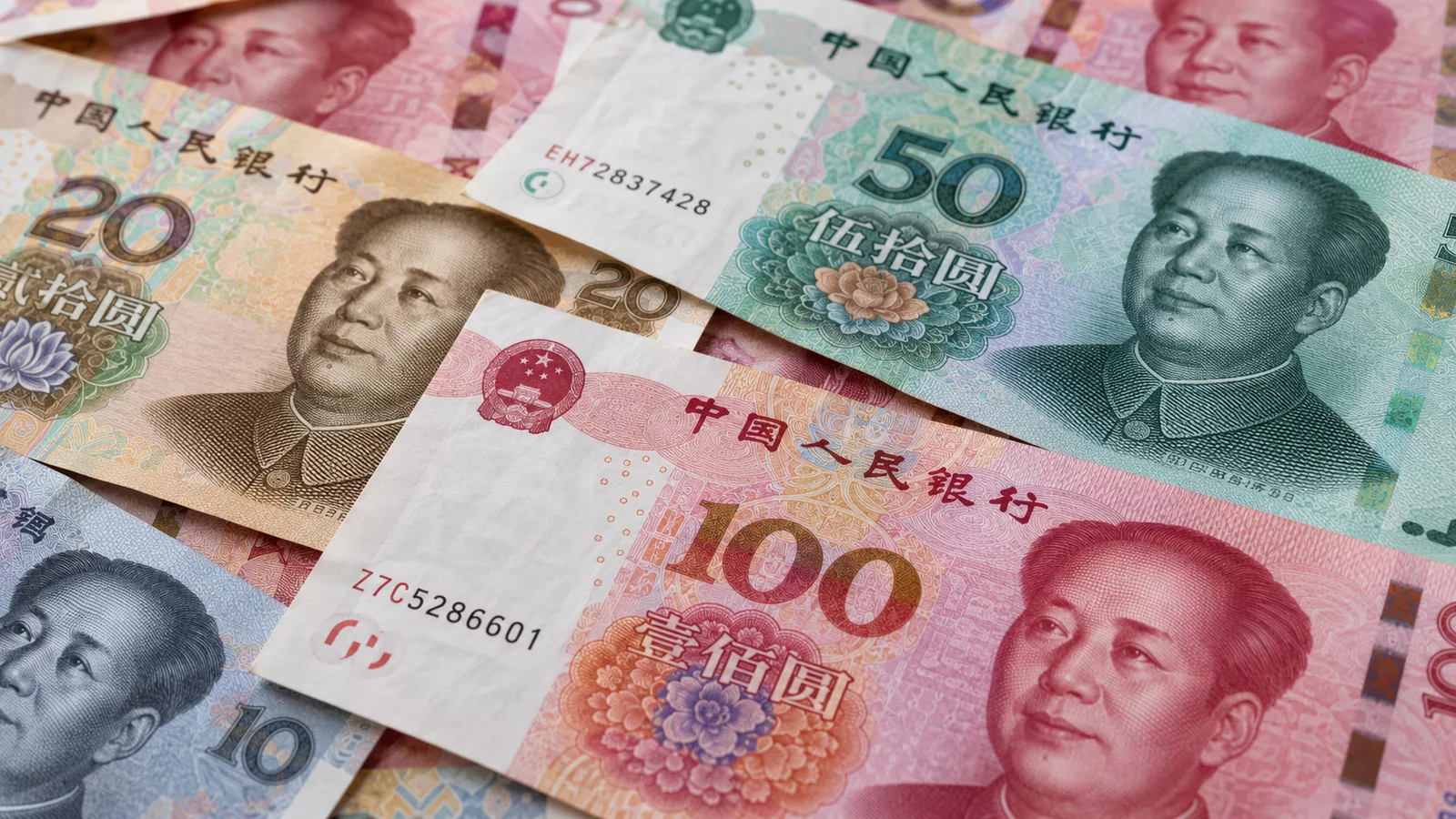
ALT for cover image: Renminbi meaning and difference between RMB yuan CNY and CNH explained
Renminbi means “people’s currency” and is the official name of the currency of the People’s Republic of China. Yuan is its basic unit, while RMB is a common abbreviation for renminbi and CNY is the international currency code normally associated with the onshore Chinese yuan. This is why a Chinese price might be described as 100 yuan, written with a ¥ symbol, discussed as an amount of renminbi and represented as CNY 100 in financial systems.
The distinction sounds more complicated than it is. A useful comparison is the British currency: the currency is called sterling, while prices are stated in pounds. Renminbi and yuan do not have precisely the same linguistic relationship, but the analogy helps explain why both names can refer to Chinese money without being interchangeable in every context.
Understanding the renminbi meaning also makes financial news easier to follow. References to RMB, CNY, CNH, yuan appreciation or renminbi internationalization all concern China’s currency, but each term tells the reader something slightly different about the unit, market or context being discussed.
What Does Renminbi Mean Literally?
Renminbi, written 人民币 in simplified Chinese, literally means “people’s currency.” The name is commonly abbreviated as RMB and refers to the official currency issued in the People’s Republic of China.
The word can be broken into three parts: ren refers to people, min also relates to the people or populace, and bi means currency or money. Together, the term identifies the currency itself rather than a specific denomination. In ordinary English-language financial writing, both “Chinese renminbi” and “Chinese yuan” are common, although they describe the currency from slightly different angles.
This distinction is the key to understanding the renminbi meaning correctly. Saying that something costs “100 renminbi” can be understood in everyday conversation, but 100 yuan is the more precise way to state the amount, because yuan is the unit in which the currency is counted.
Renminbi vs Yuan – What Is the Difference?
Renminbi is the name of China’s currency, while yuan is the principal unit of that currency. The terms are therefore closely related but technically do not mean exactly the same thing.
A simple analogy makes the difference easier to remember:
Renminbi = the currency.
Yuan = a unit of that currency.
Britain provides a broadly useful comparison. The currency can be called sterling, while an amount is normally expressed in pounds. Someone does not usually say an item costs “20 sterling”; it costs £20 or 20 pounds.
Chinese usage has its own linguistic conventions, so the comparison is not perfect. Still, it captures the central point: renminbi tells you what the currency is called, while yuan tells you how much of it is being counted.
RMB, CNY, CNH and Yuan at a Glance
Several abbreviations appear around the Chinese currency because they serve different purposes. Seeing them together makes the renminbi meaning considerably easier to understand.
| Term | Meaning | Where you will commonly see it |
|---|---|---|
| Renminbi | Official name of China’s currency | News, economics, government and general discussion |
| RMB | Abbreviation of renminbi | Business, prices and informal financial references |
| Yuan | Main unit of the renminbi | Everyday prices and amounts |
| CNY | ISO currency code for the Chinese yuan | Banks, currency converters, international finance |
| CNH | Market convention for offshore yuan | Offshore foreign-exchange markets |
| ¥ | Currency symbol | Prices and financial displays |
The important point is that these are not six unrelated currencies. They are different names, codes, units or market labels connected with the same Chinese monetary system.
What Does RMB Mean?
RMB is the abbreviation of renminbi. It is widely used in business documents, financial discussions, prices and reporting about China’s currency.
A company might therefore quote a contract value in RMB, while an exchange-rate screen displays CNY and a shop lists a price in yuan. These references can all concern Chinese currency even though the notation changes with context.
RMB itself is not the formal three-letter ISO currency code used in international financial systems. That role belongs to CNY. This is why someone searching a currency converter is much more likely to encounter USD/CNY than USD/RMB.
What Does CNY Mean?
CNY is the ISO 4217 currency code associated with the Chinese yuan. It is the code commonly used by banks, financial platforms, payment systems and currency converters when identifying China’s currency.
The structure is similar to other familiar currency codes. USD identifies the U.S. dollar, GBP identifies pound sterling and JPY identifies the Japanese yen. CNY provides the standardized code needed when currencies are quoted or processed internationally.
For consumers, this distinction matters most when converting money or reading an exchange rate. A quotation such as USD/CNY 7.00, for example, would conventionally indicate that one U.S. dollar corresponds to seven Chinese yuan at that quoted rate. The actual exchange rate changes continuously, so any numerical example should be treated only as an illustration.
What Does CNH Mean?
CNH is the market designation commonly used for renminbi traded outside mainland China’s onshore market. It is frequently called the offshore yuan.
Unlike CNY, CNH is not a separate national currency. One yuan remains one yuan in denomination, but onshore and offshore markets operate under different conditions and can therefore quote somewhat different exchange rates.
Hong Kong has historically been a major center for offshore renminbi activity. The development of offshore trading has allowed the currency to be used more extensively in international transactions while China’s domestic currency market remains subject to controls that differ from those of freely floating currencies.
For an ordinary traveler paying for lunch in China, the CNY/CNH distinction is unlikely to be the central concern. For companies, investors, foreign-exchange traders and readers following China’s financial markets, it becomes much more important.
Why Is China’s Currency Called Both Renminbi and Yuan?
China’s currency has two familiar names because renminbi describes the currency and yuan describes its unit. English-language usage often blurs that distinction, which is why the terms are frequently treated as synonyms.
In everyday speech, saying “the yuan strengthened” is entirely normal. Financial headlines routinely use yuan when discussing exchange-rate movements, while policy discussions may refer to the renminbi’s international role.
The same distinction appears in ordinary prices. A restaurant bill might be 200 yuan, not “200 currencies.” Renminbi identifies the monetary system being used; yuan provides the numerical unit needed to express the bill.
How Do You Pronounce Renminbi?
Renminbi is approximately pronounced “ren-min-bee” for an English speaker, although English approximations cannot reproduce Mandarin pronunciation perfectly. The Mandarin pronunciation is based on rénmínbì.
Yuan is more difficult to represent accurately with English spelling because the Mandarin sound does not correspond exactly to simply saying the English words “you-an.” Listening to a native Mandarin pronunciation is more reliable than relying solely on an English phonetic approximation.
Pronunciation does not change the financial meaning of the terms. The practical distinction remains that renminbi is the currency’s name and yuan is its principal unit.
What Is the Symbol for the Renminbi?
The symbol commonly used for yuan is ¥, which can also represent the Japanese yen. Context is therefore necessary when the symbol appears without a currency code.
Chinese prices may also use the character 元, which represents yuan as a monetary unit. In everyday mainland Chinese usage, the informal term kuai is also commonly heard when people talk about prices, somewhat like an informal way of saying “bucks” for dollars.
International systems avoid much of this ambiguity by using three-letter codes. CNY clearly identifies the Chinese currency, while JPY identifies the Japanese yen, even though both may appear with the ¥ symbol in other contexts.
Is ¥ the Yuan Symbol or the Yen Symbol?
The ¥ symbol can be used for both the Chinese yuan and Japanese yen. It therefore cannot always identify the currency by itself.
Context usually resolves the ambiguity. A price on a Chinese domestic service will generally refer to yuan, while a Japanese price will refer to yen. International booking sites and financial platforms often add CNY or JPY precisely because the symbol alone can be unclear.
This is particularly important when comparing international prices. ¥10,000 CNY and ¥10,000 JPY represent completely different monetary values, despite sharing the same symbol.
What Are Jiao and Fen?
One yuan can be divided into 10 jiao, and one jiao can be divided into 10 fen. This means one yuan equals 100 fen.
The relationship can be shown simply:
1 yuan = 10 jiao = 100 fen.
In everyday spoken Chinese, mao is commonly used informally for jiao. Very small fen-denominated amounts have become less prominent in many everyday transactions as prices and payment habits have changed, but the denomination remains part of the currency system.
Understanding these smaller units is useful because it completes the basic structure behind the renminbi meaning. Renminbi is the currency, yuan is the principal unit, and jiao and fen are subdivisions of that unit.
Who Issues the Renminbi?
The renminbi is issued under the authority of the People’s Bank of China (PBOC), China’s central bank. The PBOC plays the central monetary-policy role in the country and is responsible for functions connected with the currency and financial system.
This is distinct from China’s commercial banks. A consumer might hold an account with a commercial bank, but that institution does not independently create China’s national currency system or set national monetary policy.
The central bank’s role also matters for exchange rates. China operates a managed exchange-rate framework rather than simply leaving the renminbi to float without intervention in the same manner as some major currencies.
When Was the Renminbi Introduced?
The People’s Bank of China began issuing the renminbi in 1948, before the establishment of the People’s Republic of China in 1949. The currency helped consolidate the monetary system in areas controlled by the Communist Party during a period in which multiple currencies circulated.
China subsequently introduced different series of renminbi banknotes as its economy and monetary system developed. Modern notes look very different from the earliest issues, but the renminbi name has remained.
This history also explains why the renminbi meaning is connected to the phrase “people’s currency.” Its name emerged from the political and economic environment in which the new monetary system was established.
What Renminbi Banknotes and Coins Are Used?
Modern renminbi circulates in several banknote and coin denominations. The 100-yuan note is the largest commonly circulating banknote denomination, alongside smaller yuan notes and coins.
Banknotes commonly encountered include ¥1, ¥5, ¥10, ¥20, ¥50 and ¥100 denominations, although the exact mix people use in everyday life has changed as digital payments have become dominant in many Chinese cities. Coins and smaller denominations are also part of the monetary system.
Cash therefore remains part of the renminbi system even though mobile payments have transformed how many transactions occur. The payment method and the underlying currency should not be confused: paying digitally in China does not mean using a different monetary unit.
Is the Digital Yuan the Same as the Renminbi?
China’s digital yuan, commonly associated with e-CNY, is a digital form of central bank money denominated in renminbi. It is not a separate currency competing with the yuan.
This distinction is important because a digital payment can involve very different underlying forms of money. A balance held through a conventional commercial-bank account and central bank digital currency are not technically identical arrangements, even if both represent amounts denominated in yuan.
The digital yuan should also not be confused with cryptocurrency. It is a central bank digital currency connected to China’s sovereign monetary system, not a decentralized asset such as Bitcoin.
Is the Renminbi a Cryptocurrency?
No. The renminbi is a sovereign fiat currency, not a cryptocurrency.
Its value and issuance are connected to China’s monetary system and central bank. Bitcoin and many other cryptocurrencies operate through fundamentally different technological and monetary structures.
The existence of e-CNY can cause confusion because it is digital. But “digital” and “cryptocurrency” are not synonyms. A central bank digital currency can exist electronically while remaining a direct part of a national fiat-currency system.
How Is the Renminbi Exchange Rate Determined?
The renminbi operates under a managed exchange-rate system, so its value is influenced by both market trading and China’s exchange-rate policy. This differs from a completely fixed exchange rate and from an unrestricted free float.
For the onshore market, the People’s Bank of China announces a daily central parity rate for the renminbi against the U.S. dollar. Onshore trading is then allowed within a permitted band around that reference according to the applicable framework.
Economic forces still matter. China’s trade flows, economic growth, interest-rate expectations, capital movements, monetary policy and global demand for dollars can all influence the currency. Policy decisions and the structure of China’s foreign-exchange system add another layer that readers should understand when interpreting CNY movements.
Why Can CNY and CNH Exchange Rates Be Different?
CNY and CNH can trade at slightly different prices because the onshore and offshore markets operate under different conditions. The distinction does not mean that China has two completely separate yuan currencies.
Onshore CNY trading is subject to mainland China’s exchange-rate framework and capital controls. Offshore CNH trading responds more directly to supply and demand in international markets, although policy expectations and developments in mainland China remain highly influential.
The two rates normally remain connected, but temporary gaps can emerge. Those differences can provide information about offshore demand, market expectations and liquidity conditions, which is why financial coverage sometimes discusses the CNY-CNH spread.
Is the Renminbi Freely Convertible?
The renminbi is not fully freely convertible across all capital-account transactions in the way some major global currencies are. China maintains capital controls and regulatory requirements affecting certain movements of money across its borders.
That does not mean the renminbi cannot be exchanged internationally. It is traded globally, used in cross-border transactions and held as a reserve asset. The important distinction is that convertibility and capital flows remain subject to a framework of controls.
For travelers making ordinary currency exchanges, this issue may be largely invisible. For corporations, financial institutions and investors moving substantial capital into or out of China, the regulatory framework can be highly significant.
Is the Renminbi a Reserve Currency?
Yes. The renminbi is included in the International Monetary Fund’s Special Drawing Rights (SDR) basket, alongside the U.S. dollar, euro, Japanese yen and British pound sterling.
Its inclusion reflects the renminbi’s role in the international monetary system, although inclusion in the SDR basket does not mean it has the same global usage or reserve share as the U.S. dollar. International currency importance exists on a spectrum rather than as a simple yes-or-no category.
China has also encouraged greater cross-border use of the renminbi for trade and financial transactions. The currency’s international role has expanded considerably, but capital controls and the structure of China’s financial markets remain important factors.
Why Does the Renminbi Matter Outside China?
China is one of the world’s largest economies and a central participant in global trade, so changes in its currency can affect companies and markets far beyond China’s borders. Importers, exporters, manufacturers, investors and governments can all have exposure to movements in the yuan.
A weaker yuan can change the local-currency value of Chinese exporters’ foreign revenues and alter the relative price of Chinese goods abroad, although real trade effects depend on many additional factors. A stronger yuan can change those relationships in the opposite direction.
Currency movements can also influence investment returns. Someone holding a Chinese asset while measuring wealth in dollars, euros or another currency is exposed not only to the asset’s price but potentially to exchange-rate changes as well.
What Does a Stronger Yuan Mean?
A stronger yuan means that the Chinese currency has appreciated relative to another currency in the comparison. If fewer yuan are required to buy one U.S. dollar, for example, the yuan has strengthened against the dollar.
Suppose USD/CNY moved hypothetically from 7.20 to 6.90. Under the conventional quotation, one dollar would buy fewer yuan than before, indicating a stronger yuan relative to the dollar.
The effect is not universally positive or negative. Currency appreciation can affect import costs, exporters, consumers, companies with foreign-currency obligations and investors differently. Exchange-rate movements therefore need context rather than a simple “strong is good, weak is bad” interpretation.
What Does a Weaker Yuan Mean?
A weaker yuan means the Chinese currency has depreciated relative to the currency being compared with it. In a USD/CNY quotation, this generally appears as a higher number because more yuan are required to purchase one U.S. dollar.
For a traveler converting U.S. dollars into yuan, a weaker yuan can mean receiving more yuan per dollar before fees and exchange-rate markups. For a Chinese buyer purchasing dollar-priced goods, the same movement can make those goods more expensive in yuan terms.
This illustrates an essential principle of foreign exchange: every exchange rate compares two currencies. The same movement can create advantages for one participant and higher costs for another.
How to Read a USD/CNY Exchange Rate
USD/CNY shows how many Chinese yuan are quoted for one U.S. dollar. The first currency, USD, is the base currency, while CNY is the quote currency.
If the hypothetical rate were:
USD/CNY = 7.10
that would mean $1 corresponds to 7.10 yuan at that quoted market rate. If the figure rose to 7.30, the dollar would have strengthened against the yuan, or equivalently the yuan would have weakened against the dollar.
Consumer exchange rates may differ from headline market quotations. Banks, card issuers and money-transfer services can apply spreads or fees, so the amount a traveler actually receives may not equal the market rate displayed in financial news.
Why the Exchange Rate You Get Can Differ From the Rate on Google
The rate shown on a search engine or financial market screen is a reference rate, not necessarily the exact consumer exchange rate available for a transaction. Currency providers can make money through explicit fees, an exchange-rate markup or both.
Imagine that the market reference is 7.10 yuan per dollar but a provider effectively gives 6.95 after its pricing is applied. The difference matters just as much as a separately listed transaction fee.
This is why comparing currency services only by the words “zero fee” can be misleading. The useful number is how much CNY the recipient receives after all charges and exchange-rate margins are included.
Can Travelers Use Renminbi Outside China?
Renminbi can be exchanged and used in international financial transactions, but it is not an everyday payment currency in most countries. Travelers generally use the local currency of the country they are visiting rather than expecting shops to accept yuan.
Some banks and currency-exchange businesses outside China offer CNY, although rates, availability and fees vary considerably. Travelers should also distinguish between obtaining physical cash and simply holding or exchanging currency electronically.
For travel to mainland China, payment preparation deserves particular attention because digital payment systems are widely used. Cash remains legal currency, but travelers should understand current payment options, card acceptance and any requirements affecting foreign users before departure.
Can You Invest in the Renminbi?
Investors can obtain exposure to the renminbi in several ways, but currency exposure should not be confused with simply holding Chinese stocks. A Chinese company’s shares can be affected by its business performance, market valuation and currency movements simultaneously.
Potential forms of currency exposure can include foreign-exchange products, deposits, bonds, funds and other financial instruments, depending on jurisdiction and investor access. Each can carry different liquidity, credit, currency, regulatory and market risks.
For most beginners, the first question should therefore not be whether the yuan will rise next month. It should be why currency exposure belongs in the portfolio, what could cause losses and whether the investor understands the instrument being used.
Renminbi vs U.S. Dollar – What Is Fundamentally Different?
Both the renminbi and U.S. dollar are sovereign fiat currencies, but their international roles and exchange-rate frameworks differ substantially. The U.S. dollar trades under a floating exchange-rate system and plays a dominant role in global reserves, finance and international transactions.
China uses a more managed framework for the renminbi and retains controls affecting cross-border capital movements. At the same time, the renminbi has developed a growing international role in trade, reserves and financial markets.
These structural differences help explain why comparing USD and CNY requires more than looking at today’s exchange rate. Monetary policy, financial-market openness, capital flows, trade and institutional structures all influence how the two currencies operate globally.
Common Renminbi Mistakes to Avoid
Most confusion surrounding the renminbi comes from terminology rather than difficult economics. A few distinctions eliminate most of the common errors.
- Treating renminbi and yuan as perfectly identical terms. Renminbi is the currency name, while yuan is its main unit.
- Assuming RMB is the ISO currency code. RMB is a common abbreviation; CNY is the standardized currency code.
- Thinking CNH is a completely different currency. CNH is the market designation commonly used for offshore yuan.
- Assuming ¥ always means Chinese yuan. The same symbol is also used for Japanese yen.
- Calling e-CNY a cryptocurrency. It is central bank digital currency denominated in renminbi.
- Treating the headline exchange rate as the rate every consumer receives. Providers can add fees and exchange-rate margins.
- Assuming a stronger yuan is automatically good for everyone. Exchange-rate changes affect different participants differently.
- Confusing a low USD/CNY number with a weaker yuan. When USD/CNY falls, fewer yuan buy one dollar, meaning the yuan has strengthened, all else equal.
Keeping those distinctions straight makes most discussions about Chinese currency considerably easier to follow. It also reduces mistakes when reading exchange rates, international prices and financial news.
The Renminbi Meaning Is Simpler Than the Names Make It Look
Renminbi means “people’s currency” and is the official name of China’s currency. Yuan is its principal unit, RMB is a widely used abbreviation, CNY is the standardized international currency code, and CNH is the designation commonly used for yuan traded in the offshore market.
Those terms can initially make China appear to have several different currencies. It does not. Instead, the terminology reflects different ways of naming the currency, measuring amounts and distinguishing between onshore and offshore markets.
The easiest rule to remember is simple: renminbi is the currency, yuan is the unit. Once that distinction is clear, RMB, CNY, CNH, ¥ and most Chinese exchange-rate terminology become much easier to understand.
FAQ About Renminbi Meaning
Renminbi literally means “people's currency.” It is the official name of the currency of the People's Republic of China.
They refer to the same monetary system but technically describe different things. Renminbi is the currency's name, while yuan is its principal unit.
RMB is a common abbreviation for renminbi. CNY is the standardized ISO currency code used for the Chinese yuan in international financial systems.
CNY normally refers to yuan traded in mainland China's onshore market, while CNH is the market designation used for offshore yuan. They are not separate national currencies, but their exchange rates can differ slightly because the markets operate under different conditions.
Renminbi is the name of the currency, and yuan is the unit used to count it. This is why a price is commonly stated as a number of yuan.
China's official currency is the renminbi (RMB) . Its principal unit is the yuan, and its international ISO code is CNY.
RMB stands for renminbi , the official name of China's currency.
CNY is the ISO 4217 code for the Chinese yuan. It is commonly used by banks, currency converters and international financial systems.
CNH is the market designation commonly used for Chinese yuan traded offshore. The “H” developed from Hong Kong's important role as an offshore renminbi center.
Yes. The ¥ symbol is commonly used for the Chinese yuan, but it is also used for the Japanese yen. Currency codes such as CNY and JPY remove that ambiguity.
One yuan equals 10 jiao . Each jiao is further divided into 10 fen, so one yuan equals 100 fen.
The People's Bank of China is China's central bank and plays the central role in the country's monetary and exchange-rate framework.
The renminbi is traded internationally, but China maintains controls affecting certain capital flows and operates a managed exchange-rate framework. It is therefore not fully freely convertible across all capital-account transactions.
Yes. The renminbi is included in the International Monetary Fund's Special Drawing Rights basket and is held as a reserve asset by central banks, although its global role differs substantially from that of the U.S. dollar.
No. The digital yuan, or e-CNY, is central bank digital currency denominated in renminbi. It is part of China's sovereign monetary system rather than a decentralized cryptocurrency. wordpress vs shopify
