 uk
uk



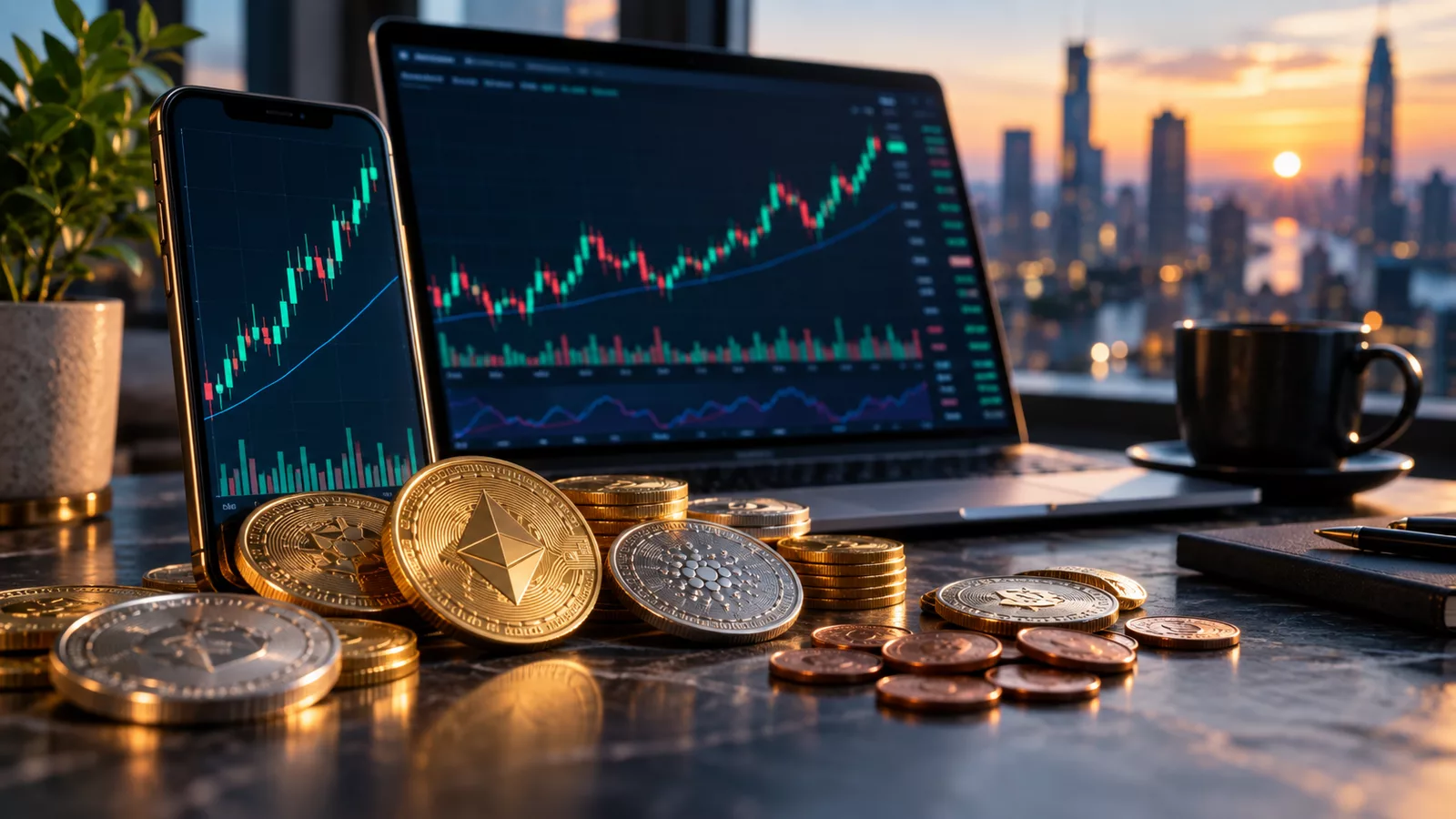
A penny cryptocurrency list usually includes digital assets trading for less than $1 per coin or token. That low unit price can look attractive, especially if you are new to crypto and imagine a $0.10 coin eventually reaching $10, $100 or even $1,000.
But the price of one token tells you almost nothing about whether a cryptocurrency is cheap or expensive. Supply, market capitalization, liquidity, token unlocks, utility, development activity and demand matter far more.
That distinction is essential in 2026 because thousands of crypto assets exist and many trade far below $1. Some belong to established blockchain networks with billions of dollars in market value. Others are tiny speculative tokens that can lose most of their value or disappear entirely.
This penny cryptocurrency list therefore does not rank coins by expected returns. Instead, it provides examples of sub-$1 cryptocurrencies worth understanding and a practical framework for separating a low token price from a genuinely low valuation.
Penny Cryptocurrency List for 2026 at a Glance
There is no official financial definition of a “penny cryptocurrency.” The phrase is commonly used informally for cryptocurrencies with a very low individual token price, often below $1.
Prices change continuously, so a token can move above or below the $1 threshold after publication. Always verify the current market price before making any financial decision.
| Cryptocurrency | Symbol | Typical category | Why people follow it |
|---|---|---|---|
| Dogecoin | DOGE | Meme coin / payments | Large community and long market history |
| Cardano | ADA | Layer-1 blockchain | Smart contracts and proof-of-stake network |
| TRON | TRX | Layer-1 blockchain | Stablecoin transfers and network activity |
| Stellar | XLM | Payments | Cross-border payment infrastructure |
| Hedera | HBAR | Distributed ledger | Enterprise-oriented network |
| VeChain | VET | Enterprise blockchain | Supply-chain and business applications |
| Algorand | ALGO | Layer-1 blockchain | Smart contracts and payments |
| The Graph | GRT | Blockchain infrastructure | Indexing blockchain data |
| Cronos | CRO | Exchange ecosystem / blockchain | Crypto.com ecosystem and Cronos network |
| JasmyCoin | JASMY | Data / IoT | Data ownership and IoT narrative |
| Gala | GALA | Gaming | Blockchain gaming ecosystem |
| Flare | FLR | Layer-1 / interoperability | Blockchain data and interoperability |
| Chiliz | CHZ | Sports / entertainment | Fan-token ecosystem |
| Basic Attention Token | BAT | Advertising / utility token | Brave browser advertising ecosystem |
| Bonk | BONK | Meme coin | Solana-based meme ecosystem |
This is an educational watchlist, not a prediction that these cryptocurrencies will rise. Some can move above $1, fall dramatically or change substantially as projects and markets evolve.
What Is a Penny Cryptocurrency?
A penny cryptocurrency is an informal name for a digital asset with a low price per token. Unlike “penny stock,” which has definitions and regulatory context in traditional securities markets, penny crypto is primarily a search and market term rather than a standardized asset class.
One person may define penny cryptocurrency as anything below $1. Another may focus only on tokens below $0.01. Some lists include established multi-billion-dollar crypto networks simply because their individual tokens have low nominal prices.
This creates a major problem.
Imagine two cryptocurrencies:
- Coin A costs $0.10 and has 100 billion circulating tokens.
- Coin B costs $100 and has 1 million circulating coins.
Coin A looks 1,000 times cheaper if you compare unit prices. But its implied circulating market capitalization is $10 billion, while Coin B’s is only $100 million.
The $100 coin is far smaller by market capitalization despite having a much higher unit price.
That is why a penny cryptocurrency list should be the beginning of your research, not the conclusion.
Why a Crypto Under $1 Is Not Necessarily Cheap
Crypto beginners often compare token prices the same way they compare products in a shop. A coin priced at $0.05 appears cheaper than Bitcoin because you can buy many more units with the same amount of money.
That comparison is misleading.
Cryptocurrencies can have radically different supplies. One project might have 20 million coins while another has 100 billion tokens.
A simple way to understand valuation is:
Market capitalization = current token price × circulating supply
| Crypto | Token price | Circulating supply | Simplified market cap |
|---|---|---|---|
| Coin A | $0.01 | 100 billion | $1 billion |
| Coin B | $10 | 10 million | $100 million |
| Coin C | $100 | 1 million | $100 million |
Coin A has the lowest token price but the highest valuation in this simplified example.
This is one of the most important lessons for anyone searching for the best penny cryptocurrency. A lot of zeros after the decimal point do not automatically create more upside.
1. Dogecoin (DOGE)
Dogecoin is one of the most recognizable cryptocurrencies trading below $1 in 2026. It began as a meme-inspired project but developed a large community and has survived multiple crypto market cycles.
DOGE is unusual compared with many tiny penny cryptocurrencies because its low individual price does not mean it has a tiny valuation. Its large circulating supply allows the unit price to remain relatively low even when the total network value reaches billions of dollars.
Dogecoin is used for transfers and payments in some contexts, but speculation and community sentiment remain major drivers of market attention.
Anyone considering DOGE should therefore look beyond the price of one coin. Market capitalization, liquidity, adoption and the supply model provide much more useful information.
Key lesson: A sub-$1 price can coexist with a very large market capitalization.
2. Cardano (ADA)
Cardano is a proof-of-stake blockchain designed to support smart contracts and decentralized applications. ADA is the network’s native cryptocurrency.
Its place on a penny cryptocurrency list illustrates why the category can be misleading. Cardano is not an obscure micro-cap project simply because ADA trades below $1. Its large token supply means it can maintain a substantial total valuation at a comparatively low unit price.
When evaluating ADA, consider network usage, development, decentralized applications, staking participation and competition from other smart-contract platforms.
Do not build a price target by simply asking what would happen if ADA reached the same unit price as another cryptocurrency. Different supplies make those comparisons unreliable.
Key lesson: Compare blockchain valuations, not just the prices printed next to their tokens.
3. TRON (TRX)
TRON is a blockchain network that supports smart contracts, decentralized applications and digital-asset transfers. TRX is its native token.
The network is particularly notable for significant stablecoin-transfer activity. That provides a more useful starting point for research than simply observing that TRX costs less than $1.
Investors should examine network usage, transaction activity, decentralization, regulatory considerations and competition from alternative networks.
TRX also demonstrates why the label “penny cryptocurrency” can group fundamentally different assets together. A mature blockchain network and a newly launched speculative token can both cost a few cents while carrying completely different risk profiles.
Key lesson: Utility and network activity matter more than the number of cents one token costs.
4. Stellar (XLM)
Stellar is a blockchain network focused heavily on transferring value and supporting payment infrastructure. Its native asset is Lumens, represented by the ticker XLM.
The project’s payment focus makes it fundamentally different from meme coins that may appear alongside it on penny cryptocurrency lists.
For XLM, useful research areas include payment adoption, network activity, partnerships, transaction costs and competition from other payment networks.
The token’s sub-$1 price should not be interpreted as evidence that it has to reach $1 eventually. Price milestones are psychologically appealing, but markets do not owe an asset a particular round number.
Key lesson: A $1 target has no special economic significance simply because a token currently trades below it.
5. Hedera (HBAR)
HBAR is the native cryptocurrency of Hedera, a distributed ledger network designed for applications including payments, tokenization and enterprise use cases.
Hedera uses a different technical architecture from conventional blockchains, which makes understanding the underlying network particularly important before evaluating the token.
Research should include token supply, network activity, governance, ecosystem development and whether enterprise adoption translates into sustainable demand for HBAR.
A low unit price can attract beginners, but the supply structure determines what different price targets would imply for the network’s overall valuation.
Key lesson: Calculate the implied market cap of your target price before assuming that target is realistic.
6. VeChain (VET)
VeChain focuses on blockchain applications for businesses, including areas such as supply-chain tracking and product data.
VET has historically attracted attention because its low unit price makes it appear inexpensive. As with every asset in this penny cryptocurrency list, that interpretation is incomplete without considering supply and total valuation.
For research, examine real network activity, business adoption, token economics and whether announced use cases translate into sustained blockchain usage.
Enterprise partnerships can sound impressive in headlines, but investors should distinguish between pilot programs, technical integrations and economically meaningful long-term adoption.
Key lesson: Announcements are less important than measurable usage.
7. Algorand (ALGO)
Algorand is a proof-of-stake blockchain designed around payments, smart contracts and decentralized applications. ALGO is its native cryptocurrency.
The network competes in a crowded market that includes Ethereum and numerous alternative Layer-1 and Layer-2 ecosystems.
A serious evaluation should therefore consider more than technical claims. Developer activity, applications, users, transaction demand, token distribution and ecosystem liquidity all matter.
Low prices can create the illusion that a return to a previous all-time high is easy. In reality, token supply can change over time and the competitive landscape may be very different from the one that existed during a previous market cycle.
Key lesson: Historical highs are not guaranteed future destinations.
8. The Graph (GRT)
The Graph is blockchain infrastructure designed to help applications index and query blockchain data. GRT is used within its ecosystem.
That makes GRT different from a cryptocurrency primarily marketed as money or a meme asset. Its investment case is tied more closely to demand for blockchain data infrastructure and the economics of its network.
Before considering GRT, examine token supply, protocol usage, fees, competition and how value flows through the ecosystem.
Infrastructure projects can provide real services without automatically making their tokens attractive investments. The relationship between product adoption and token value needs to be understood separately.
Key lesson: A useful crypto project does not automatically mean its token is undervalued.
9. Cronos (CRO)
CRO is associated with the Crypto.com ecosystem and the Cronos blockchain.
Its value proposition therefore includes both blockchain utility and connections with a major crypto platform ecosystem. That can create opportunities but also means platform developments and broader market sentiment can affect the token.
When evaluating CRO, consider network activity, token utility, ecosystem incentives and dependence on centralized services.
Exchange-related tokens also deserve additional scrutiny because the financial condition, policies and reputation of associated platforms can influence sentiment.
Key lesson: Understand the organizations and ecosystems connected to a token, not just the token itself.
10. JasmyCoin (JASMY)
JasmyCoin is associated with a project focused on data and Internet of Things concepts. JASMY’s low nominal price has made it a frequent inclusion on lists of cheap cryptocurrencies.
Very low-priced tokens can encourage unrealistic thinking. A move from $0.01 to $1 sounds simple because both numbers appear small, but it represents a 100-fold increase in token price.
Whether such a valuation is plausible depends on circulating supply, future token releases, adoption and market demand.
Before considering a low-priced token such as JASMY, calculate what your desired price would imply for total market capitalization.
Key lesson: Always translate dramatic price targets into implied valuation.
11. Gala (GALA)
GALA is associated with a blockchain entertainment and gaming ecosystem.
Gaming tokens can attract significant attention when blockchain gaming becomes a strong market narrative. They can also lose momentum quickly when users, developers or investors move elsewhere.
Evaluate actual games, users, ecosystem activity, token utility and supply rather than assuming the popularity of gaming automatically creates demand for a specific cryptocurrency.
This category can be particularly sensitive to sentiment and changing consumer trends.
Key lesson: Narrative can generate attention, but sustainable demand requires more than a popular theme.
12. Flare (FLR)
Flare is a Layer-1 blockchain focused partly on making blockchain and external data more accessible to decentralized applications.
FLR’s low unit price places it within the broad penny cryptocurrency definition used in this guide. That does not tell you whether its valuation is attractive.
Research should focus on network adoption, data protocols, applications, supply distribution and competition.
Newer ecosystems can offer technological ideas that sound compelling while still facing the difficult challenge of attracting developers, users and lasting liquidity.
Key lesson: Technology needs an active ecosystem to create meaningful network effects.
13. Chiliz (CHZ)
Chiliz is closely associated with sports and entertainment blockchain applications and the fan-token ecosystem.
That gives CHZ a more specialized use case than many general-purpose cryptocurrencies. Its prospects can depend on adoption within sports, fan engagement and the broader health of its ecosystem.
Sports partnerships can increase visibility, but visibility alone does not determine token value.
Look at usage, transaction demand, token supply and whether users need the asset for meaningful activities rather than simply trading it.
Key lesson: Brand recognition and token demand are different things.
14. Basic Attention Token (BAT)
Basic Attention Token is associated with the Brave browser ecosystem and a model designed around digital advertising and user attention.
BAT is one of the longer-established tokens in the crypto market, making it different from newly launched penny cryptocurrencies with little operating history.
Its underlying concept connects token economics with advertising, creators and browser users. Research should therefore include actual ecosystem usage in addition to market price.
A project can survive for years without necessarily delivering exceptional investment returns. Longevity is useful information, but it should not replace valuation analysis.
Key lesson: Survival through multiple market cycles is meaningful, but it does not guarantee future performance.
15. Bonk (BONK)
Bonk is a meme coin associated with the Solana ecosystem. Its extremely low per-token price is partly the result of its enormous token supply.
It provides one of the clearest examples of why nominal price can mislead. A token can trade at a tiny fraction of one dollar while already representing a substantial total market value.
Meme coins are also highly dependent on community attention, market sentiment and speculative activity. Their prices can move rapidly in both directions.
Anyone considering a meme coin should assume that extreme volatility is possible and should understand that popularity can disappear much faster than a fundamental business or network can change.
Key lesson: Lots of tokens for $10 does not mean you are buying more economic value.
How to Compare Penny Cryptocurrencies Properly
A penny cryptocurrency list becomes more useful when you stop ranking coins by price and start comparing the characteristics behind that price.
Five metrics deserve particular attention.
| Metric | What it tells you | Why it matters |
|---|---|---|
| Market capitalization | Approximate circulating valuation | Better context than unit price |
| Circulating supply | Tokens currently circulating | Helps explain current market cap |
| Maximum/total supply | Potential broader supply | Can reveal dilution risk |
| Trading volume | Amount actively traded | Helps assess liquidity |
| FDV | Value using a broader/max supply measure | Highlights potential valuation after supply expansion |
Market capitalization is generally calculated using token price and circulating supply. Fully diluted valuation can show what valuation would look like if a broader future supply were valued at the current price.
Neither metric tells you whether a cryptocurrency will rise. They simply provide a better foundation than asking whether one token costs pennies.
Market Cap vs Price – The Most Important Penny Crypto Lesson
Consider a hypothetical token trading for only $0.001.
That sounds extremely cheap. Now suppose there are one trillion tokens in circulation.
Its market capitalization would be:
$0.001 × 1 trillion = $1 billion
If someone claims that token can “easily reach $1,” calculate the result:
$1 × 1 trillion = $1 trillion
The price target requires a 1,000-fold increase and would imply a $1 trillion circulating valuation if supply remained unchanged.
That does not prove the target is impossible. It shows how different the claim looks once supply is included.
This calculation is one of the quickest ways to evaluate dramatic social-media predictions about penny cryptocurrencies.
What Is Circulating Supply?
Circulating supply estimates the number of tokens available in the market and held by the public. It differs from total supply and maximum supply.
That distinction matters because a project may have only part of its eventual token supply circulating today.
Imagine a token has:
- 1 billion circulating tokens.
- 10 billion total future tokens.
- A current price of $0.10.
Its circulating market cap would be about $100 million. But valuing all 10 billion tokens at $0.10 would imply a much larger $1 billion valuation.
Future token unlocks can increase the amount available to the market. If demand does not grow at the same pace, additional supply can create pressure on price.
Always check both circulating supply and the broader token supply before calling a penny cryptocurrency cheap.
What Is Fully Diluted Valuation?
Fully diluted valuation, commonly shortened to FDV, estimates a cryptocurrency’s valuation using a broader or maximum token supply and the current token price.
It can help identify situations where today’s circulating market cap looks relatively small because many tokens have not yet entered circulation.
Suppose a project has a $200 million circulating market cap but a $2 billion fully diluted valuation. That gap deserves investigation.
Ask:
When can additional tokens enter circulation? Who receives them? Are they allocated to the development team, early investors, ecosystem incentives or another group?
FDV is not a prediction of what the project will eventually be worth. It is another tool for understanding supply and potential dilution.
Does a Low Market Cap Mean More Upside?
A smaller market capitalization can mathematically require less additional capital to produce a large percentage move than a massive asset, but that does not make small-cap crypto a better investment.
Smaller cryptocurrencies often come with greater risks.
They may have:
- Lower liquidity.
- Fewer users.
- Less development activity.
- Greater ownership concentration.
- Higher volatility.
- Limited exchange availability.
- Greater manipulation risk.
- Unproven technology.
- Higher probability of project failure.
A potential 10x return sounds attractive until you also consider the possibility of losing 90%, 99% or effectively the entire investment.
Higher potential upside usually arrives with higher uncertainty rather than free additional return.
How Liquidity Changes the Risk of Penny Crypto
Liquidity describes how easily an asset can be bought or sold without causing a large price movement.
A cryptocurrency can show a market price of $0.02 while having very little genuine trading activity. A small purchase may push its price sharply upward, while selling a meaningful position can push it down.
This is particularly important with micro-cap tokens.
Look at trading volume, exchange availability, order-book depth and the number of liquid trading pairs. Be skeptical of unusually large reported volume from obscure venues.
Liquidity matters because the price shown on a screen is useful only if you can actually transact near that price.
The broader financial concept works similarly outside crypto. WeaveMoney’s guide to improving liquidity explains why the ability to turn an asset into usable cash can matter as much as the nominal value attached to it.
Penny Cryptocurrency vs Penny Stocks
The words sound similar, but penny cryptocurrencies and penny stocks are not the same type of asset.
| Feature | Penny cryptocurrency | Penny stock |
|---|---|---|
| Asset | Digital token or coin | Company equity |
| Ownership in company | Usually no | Yes |
| Trading hours | Crypto often trades 24/7 | Depends on securities market |
| Valuation metric | Market cap, supply, network metrics | Market cap, financial statements, business metrics |
| Regulation | Varies by asset and jurisdiction | Securities regulation applies |
| Extreme volatility | Common | Can also be high |
| Custody | Exchange or crypto wallet | Brokerage/custodian structure |
A cryptocurrency token generally does not give you ownership of a company simply because a development organization exists behind the project.
The analysis therefore needs to focus on token economics, network use, supply and crypto-specific risks rather than applying stock-analysis rules without modification.
How to Research a Penny Cryptocurrency Before Buying
Research should begin with the project rather than its price chart.
A basic crypto checklist can help filter out assets that deserve no further attention.
- Understand what the project does. If you cannot explain its purpose simply, do more research.
- Check circulating and total supply. Look for large future unlocks.
- Calculate market capitalization. Do not judge valuation by token price.
- Review liquidity. Confirm that meaningful trading activity exists.
- Examine token distribution. Heavy concentration among insiders or a few wallets can increase risk.
- Check development and usage. Look for evidence that the network or product is actually being used.
- Understand token utility. Determine why anyone needs the token.
- Research security history. Hacks, exploits and compromised contracts deserve attention.
- Verify exchange availability. Listings on obscure platforms can create additional risk.
- Read the token unlock schedule. Future supply can materially affect the market.
No checklist can tell you which cryptocurrency will rise. Its purpose is to help identify risks hidden behind an attractive price.
How to Buy and Store Penny Cryptocurrency
The process depends on the cryptocurrency. Established tokens may be available through major centralized exchanges, while smaller assets can require decentralized exchanges and compatible wallets.
Before buying, verify the token’s official contract address where relevant. Tokens can have identical or nearly identical names, and scam assets may deliberately imitate legitimate projects.
If you are new to wallets, exchanges and custody, it is better to understand those mechanics before searching for the next cheap token. WeaveMoney’s guide on how to buy and store cryptocurrency walks through the practical buying and storage considerations using Shiba Inu as an example.
Storage matters because cryptocurrency ownership ultimately depends on access and custody. Losing a seed phrase or sending assets to an incompatible address can create losses that may be impossible to reverse.
Crypto Wallets and Custody – What Beginners Need to Know
Buying a cryptocurrency and storing it are separate decisions.
Assets left with a centralized provider depend partly on that provider’s security, financial condition and withdrawal policies. Self-custody gives you greater direct control but also transfers responsibility for protecting private keys and recovery phrases to you.
A crypto wallet does not literally hold coins inside an app or device. It manages the credentials that allow you to access and control blockchain assets.
If you use self-custody:
- Protect the recovery phrase offline.
- Never send it to another person.
- Do not enter it into random websites.
- Verify wallet software before installing it.
- Double-check addresses before transfers.
- Consider a small test transaction before moving a large amount.
There is no custody method that removes every risk. The appropriate setup depends on your technical knowledge, holdings and threat model.
8 Red Flags in Cheap Cryptocurrencies
Low-priced tokens can attract scammers because the dream of turning a few dollars into a fortune is easy to market.
Watch for these warning signs:
- Guaranteed returns. Crypto returns cannot be guaranteed.
- “Next Bitcoin” claims. A cheap unit price does not make two assets comparable.
- Anonymous promotion without substance. Influencer excitement is not evidence of adoption.
- Extreme insider concentration. A few wallets may have the ability to move the market.
- No clear token utility. Ask why the token needs to exist.
- Unrealistic price targets. Calculate the market cap implied by the prediction.
- Tiny or questionable liquidity. You may struggle to sell even if the displayed price rises.
- Pressure to act immediately. Artificial urgency is a common feature of financial scams.
A professional-looking website, active social account and large community do not prove that a cryptocurrency is legitimate.
Why Penny Cryptocurrencies Can Fall 90% or More
A decline of 90% requires a much larger subsequent gain than many beginners expect.
Suppose you buy a token for $100 and it loses 90%. Your position is now worth $10.
To return from $10 to $100, the remaining investment must rise 900%.
| Loss | $100 becomes | Gain needed to return to $100 |
|---|---|---|
| 20% | $80 | 25% |
| 50% | $50 | 100% |
| 75% | $25 | 300% |
| 90% | $10 | 900% |
| 95% | $5 | 1,900% |
| 99% | $1 | 9,900% |
This asymmetry is particularly important for highly speculative penny cryptocurrencies. “It cannot fall much further” is mathematically false.
A token priced at $0.001 can still lose another 90% and trade at $0.0001.
Can a Penny Cryptocurrency Reach $1?
Yes, some cryptocurrencies trading below $1 can cross that level. But whether a particular token can reasonably reach $1 depends heavily on supply and demand.
Do not begin with the $1 target. Begin with the implied valuation.
The formula is:
$1 × circulating supply = implied circulating market cap at $1
If a token has 100 billion units circulating, a $1 price implies a $100 billion market capitalization.
Then compare that valuation with established crypto networks and ask what level of adoption would be required to justify it.
This approach will not predict the future, but it immediately exposes many unrealistic price claims.
Is It Better to Own 10,000 Cheap Coins or a Fraction of Bitcoin?
The number of coins you own does not determine the economic size of your investment.
If you invest $100, then $100 of a low-priced cryptocurrency and $100 of Bitcoin both begin as $100 positions. Owning 100,000 units of one asset does not give the investment more value than owning a small fraction of another.
Future percentage performance matters.
If either investment rises 20%, $100 becomes $120 before fees and taxes. If either loses 50%, $100 becomes $50.
The psychological appeal of owning thousands or millions of tokens is one reason penny cryptocurrencies attract beginners. Unit count is not investment value.
Are Meme Coins Penny Cryptocurrencies?
Many meme coins qualify under the informal penny cryptocurrency definition because their individual token prices are far below $1.
But not every penny cryptocurrency is a meme coin.
Cardano, Stellar and TRON, for example, are blockchain-network assets with use cases very different from meme tokens. Conversely, Dogecoin and Bonk have strong meme origins and community-driven market dynamics.
Meme coins can experience exceptionally rapid price changes because attention, community activity and speculation can dominate their market narratives.
That makes risk management particularly important. A viral meme can create demand quickly, but online attention can move somewhere else just as fast.
Are Penny Cryptocurrencies Good for Beginners?
Low token prices can make penny cryptocurrencies appear beginner-friendly, but some are among the most difficult crypto assets to evaluate.
A new investor has to understand market capitalization, supply, liquidity, custody, smart-contract risk, token unlocks and potentially decentralized exchanges. Smaller projects can also provide less reliable information than established networks.
Beginners may benefit more from first understanding how cryptocurrency markets and wallets work rather than immediately searching for the cheapest token available.
The goal should not be to find the cryptocurrency with the smallest number after the dollar sign. It should be to understand what you are buying, why it has value and what could cause that value to disappear.
Better Alternatives to Chasing the Cheapest Crypto
If your only reason for considering a cryptocurrency is that one token costs pennies, reconsider the selection process.
A stronger approach is to compare projects using market capitalization, liquidity, network usage, token supply and the durability of the underlying ecosystem.
You can also reduce concentration risk rather than putting an entire speculative allocation into one tiny token. Diversification cannot prevent crypto losses, but concentrating everything in one highly speculative asset creates a very different risk profile.
Another alternative is simply to wait. There is no requirement to buy a cryptocurrency because it is trending or because its price has recently increased.
Missing one rally is financially less damaging than losing money on an asset you never understood.
Common Penny Cryptocurrency Mistakes
Penny crypto encourages several predictable mistakes because low prices make extreme future gains appear deceptively easy.
The most common errors include:
- Comparing unit prices instead of market caps. Token supply makes direct price comparisons meaningless.
- Assuming $1 is inevitable. Round-number targets have no special economic rule behind them.
- Ignoring token unlocks. Future supply can dilute the existing circulating market.
- Buying because of social-media hype. Popularity can disappear quickly.
- Ignoring liquidity. A paper gain matters little if the position cannot be sold efficiently.
- Keeping poor custody practices. A profitable investment can still be lost through compromised credentials.
- Chasing coins after sudden pumps. Rapid price increases can reverse just as quickly.
- Investing money needed for essential expenses. Highly speculative assets can lose most or all of their value.
The common theme is simple: a low token price should never substitute for research.
Is Penny Cryptocurrency Worth Buying in 2026?
A penny cryptocurrency can have genuine technology, active users and a substantial ecosystem. Another coin at exactly the same price can be an illiquid speculative token with little more than marketing behind it.
That is why the phrase “penny cryptocurrency” is useful for discovering assets but weak as an investment strategy.
Start with market capitalization and supply. Then examine liquidity, token distribution, real usage, security, development activity and the purpose of the token. Finally, consider whether the potential return justifies the possibility of a substantial or complete loss.
A cryptocurrency does not become undervalued merely because you can buy thousands of tokens for a few dollars.
In crypto, cheap-looking and actually cheap are two very different things.
FAQ
Penny cryptocurrency is an informal term for a cryptocurrency with a low unit price, often below $1. There is no universally accepted official definition.
Cryptocurrencies such as Dogecoin, Cardano, TRON and Stellar have traded below $1 during 2026. Prices change continuously, so verify the current price before relying on any penny cryptocurrency list.
There is no universally best penny cryptocurrency. A low unit price does not show whether a token is undervalued. Compare market capitalization, supply, liquidity, utility, network activity and risk instead.
Some sub-$1 cryptocurrencies can reach $1, but the feasibility depends heavily on token supply and demand. Multiply the $1 target by circulating supply to see the market capitalization that the target would imply.
Not necessarily. A token priced at $0.10 with 100 billion units circulating has a $10 billion market cap. Another cryptocurrency costing hundreds of dollars per coin can have a lower total valuation if its supply is much smaller.
Market capitalization is generally calculated by multiplying the current token price by circulating supply. It provides more valuation context than individual token price.
Fully diluted valuation estimates a cryptocurrency's valuation using a broader or maximum token supply at the current market price. It can help reveal the potential impact of tokens that are not yet circulating.
Yes. Risks can include extreme volatility, poor liquidity, token dilution, concentrated ownership, hacking, fraud, weak adoption and complete project failure. Risk varies substantially between individual cryptocurrencies.
Under the common definition of a penny cryptocurrency as a token trading below $1, Dogecoin can qualify when its market price remains below that threshold. Its total market capitalization can still be worth billions of dollars.
Cardano can fit the informal category when ADA trades below $1. However, its large total valuation means it should not be confused with an obscure micro-cap token simply because its individual coins are inexpensive.
Beginners should first understand market capitalization, token supply, liquidity, wallets and custody. Low-priced cryptocurrencies can be highly speculative, and the number of tokens you can buy does not determine potential return.
Availability depends on the token. Established cryptocurrencies may trade on major centralized exchanges, while smaller tokens may only be available through particular exchanges or decentralized markets. Verify the platform, token contract and local availability before transferring money.
There is no reliable method for identifying which cheap cryptocurrency will rise. Screening for market cap, liquidity, supply, usage, development activity and token distribution can improve research, but it cannot predict future returns.
Yes. A crypto asset can lose most or effectively all of its market value, and additional losses can result from fraud, platform failure, compromised wallets or sending assets incorrectly. how much money should i have saved by 30

Alex Yurchenko is a graduate of the State University of Trade and Economics and has been dedicated to the world of cryptocurrencies since 2016 when he purchased his first 0.001 Bitcoin. A passionate crypto trader, Alexander runs a Telegram channel and blog focused on blockchain technology. On our portal, he covers cryptocurrency news, analyzes startups, and reports on events in the crypto world.